AMPED Master’s Program Prepares Engineers for a Changing Medtech Landscape
U-M BME’s professional Master of Engineering program continues to grow its impact through clinic-driven design, industry-aligned training, alumni engagement and an expanding focus on the impact of AI.
U-M BME’s professional Master of Engineering program continues to grow its impact through clinic-driven design, industry-aligned training, alumni engagement and an expanding focus on the impact of AI.
Housed in the Department of Biomedical Engineering, AMPED is a professional Master of Engineering degree designed to prepare engineers for careers in the medical technology industry. The program combines a yearlong design-build-test practicum with coursework in the fundamentals of medical product development, complemented by an emphasis on business decision-making, professional development and leadership.
For Jan Stegemann, Professor, Biomedical Engineering and Director of the AMPED Program, its evolution reflects a long-standing strength in U-M BME: preparing students to translate engineering ideas into solutions that can make a difference in clinical care. Alongside the core practicum, students study quality systems, regulatory strategy, risk management, design controls, prototyping, formative testing and proof of concept. Advanced topics have included medical device cybersecurity, creativity in design, sustainability in medtech, and case studies on recent recalls in the medical technology space.
“The program has evolved from a graduate course that started 15 years ago, which then became a concentration in our master’s program,” Dr. Stegemann said. “That concentration was also popular, so we expanded it into its own Master of Engineering degree, which is the current AMPED program.”
Now in its fourth cohort as a standalone degree program, AMPED was created in response to feedback from industry partners and other stakeholders who emphasized the need for graduates who understand not only engineering design, but also the regulatory, quality, risk and business contexts that shape medical product development.
“It has evolved extremely well for the last four years,” Stegemann said. “We track placement data, and it has been very strong. Students are securing jobs at the types of companies they are interested in, and in the types of roles they want.”
AMPED graduates move into a variety of careers in medical technology industries, including initial roles as clinical specialists, product design engineers, R&D engineers, quality engineers and other positions associated with medical product development. Employers include some of the largest global healthcare companies, as well as midsize and smaller companies, startups and the U.S. government.
A major outcome of the program, Dr. Stegemann said, is that students leave with a broader understanding of the medtech career landscape.
“One thing we’ve really noticed—and in fact, one of the goals that we’ve achieved—is that students are much more aware of the breadth of job opportunities and functional roles they can fill in various organizations,” Dr. Stegemann noted. “That is helpful to them, because they have a broader spectrum of jobs they can apply for, or they may apply for roles that they were not familiar with before their AMPED experience.”
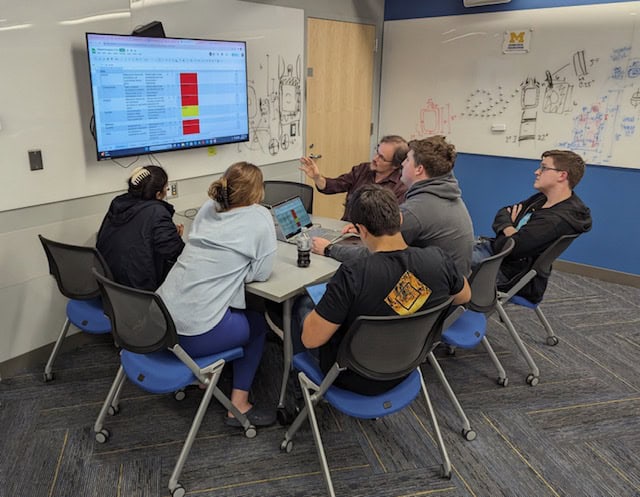
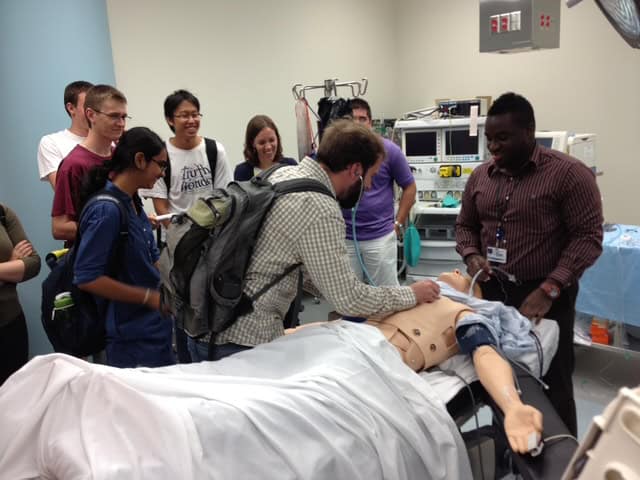
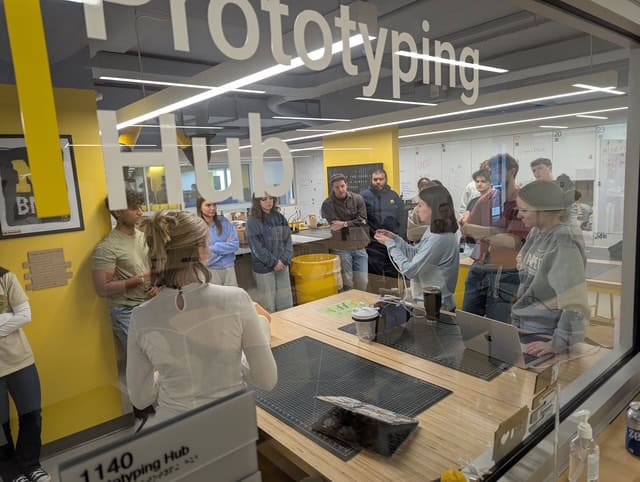
At the heart of AMPED is a clinical product development experience. Each year, clinicians present current clinical problems to the student cohort. Students evaluate needs, form teams and develop device-based solutions through a full design-build-test sequence. Teams work with clinician consultants who provide insight into clinical practice and feedback on product concepts.
“We are close to the clinic in that we receive clinical problems from practicing clinicians—not always doctors, but also nurses, EMTs, and other healthcare professionals—providing a variety of clinical experiences,” Dr. Stegemann said.
Recent AMPED projects have addressed needs across cardiology, obstetrics and gynecology, ophthalmology, orthopedic surgery, pediatrics, plastic surgery, radiology and thoracic surgery. Examples include a compression device to achieve hemostasis following catheterization, a tool for laparoscopic hysterectomies in low-income countries, a predictive monitor for diurnal enuresis in children, a portless breast tissue expander for breast reconstruction and a device to detect air leaks in the lung.
The program’s structure is intentionally integrated. Students directly apply the concepts that they learn in classes to their team projects. Dr. Stegemann said. “It is experiential not just from the standpoint that you are physically building something, but also in that you are intellectually applying what you have learned in other courses on a complex project.”
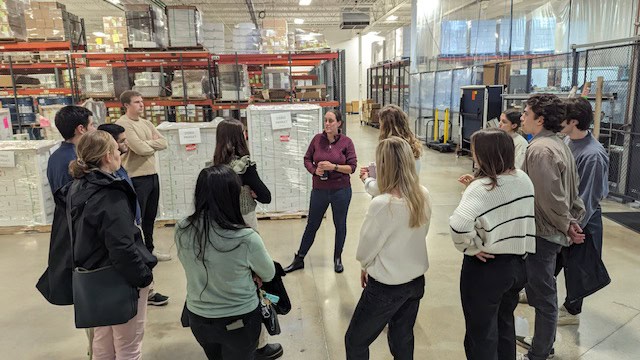
AMPED also emphasizes the realities of maintaining a viable business model. “We are very focused on helping our students understand what medical product development looks like from the perspective of industry,” Dr. Stegemann said. “We frequently and intentionally engage industry colleagues and bring them into the program to ensure that our curriculum reflects current industry needs and practices.”
That industry-informed approach is supported by a close teaching collaboration between Dr. Stegemann and Dr. Jonathan Fay, Clinical Associate Professor of Practice, Biomedical Engineering, and Associate Chair for Translational Research, who work together across key elements of the AMPED curriculum.
“Jonathan and I collaborate closely across the entire AMPED curriculum,” Dr. Stegemann said. “We co-teach the core design-build-test course, and we are both there to help the teams.”
While the design-build-test practicum serves as the central hands-on experience for students, the broader curriculum is designed to help them understand the many dimensions of medical product development. Dr. Stegemann teaches courses focused on quality systems, regulatory structures, risk management and advanced medical product development topics, including AI and cybersecurity.
Dr. Fay leads the program’s professional and leadership development curriculum, which helps students examine career options, better understand their own strengths and prepare to work effectively in multidisciplinary organizations.
“Jonathan’s main course focuses on professional and leadership development,” Dr. Stegemann said. “Students explore different career paths, practice self-assessment to figure out what they are interested in and what they may be good at, and then look at leadership—understanding themselves, how people lead, and how they might lead or react to leaders.”
The course also introduces students to business principles and decision-making processes that shape how medical technology companies evaluate projects, products and people. While entrepreneurship is included for students who are interested, the course is not centered solely on startup creation.
Dr. Stegemann noted that “Our professional development course is partly about helping students understand how businesses make decisions about a project, a product or even an employee, and what those decisions are based on.”
Together, the teaching partnership helps AMPED students connect technical design, regulatory strategy, leadership development and industry realities into a cohesive preparation for medtech careers. This emphasis on professional preparation helps students see how their technical skills connect to real-world roles, organizational decision-making and long-term career growth.
The majority of AMPED students are preparing for industry careers. Dr. Stegemann said that about 90 to 95 percent of AMPED’s students enter the program intending to work in medtech, consulting, government or related industry roles. Many are drawn to large established companies, such as Stryker, Medtronic, Johnson & Johnson, Baxter and Boston Scientific, while others are interested in smaller companies or startups.
“AMPED is focused on making engineers effective whether they are working in a startup, an established company, at the FDA, or elsewhere in medtech,” Dr. Stegemann said. “We want alumni to do their jobs effectively, feel comfortable in the medtech industry, understand their options, and have a rewarding career path.”
One of the most significant new areas of emphasis for AMPED is artificial intelligence. The program has already begun incorporating AI into assignments and discussions, and Dr. Stegemann expects that emphasis to increase.
“We’ve incorporated a little more AI each year, and we will continue to expand it as AI evolves,” he said. “Last year, we included assignments that required the use of AI so that students could practice and see how these tools can be used in their work.”
AI is becoming increasingly important across the medtech ecosystem, including in product development, regulatory submissions, review processes, marketing and post-market considerations.
“AI is changing many industries, including the medical device industry—from the regulatory standpoint, from the product development standpoint, from the marketing standpoint and from almost all aspects,” Dr. Stegemann said. “So we are certainly monitoring how it can best be integrated into our program, and how students can use it effectively to improve their work.
At the same time, he said, medtech’s highly regulated environment requires a thoughtful approach.
“In medtech and the development of medical devices, there are many regulations, standards, and industry norms,” Dr. Stegemann added. “In some ways, the industry might be a little bit buffered, because you cannot arbitrarily change rules overnight. On the other hand, clearly, there is a space and great potential for AI. So that is the balance we are working to achieve.”
In AMPED, AI is framed as a tool—not as a replacement for student experience or critical thinking. “For example, you can use an AI tool as a starting point, or as an opportunity to have a conversation about something— a conversation with a very knowledgeable source, but not necessarily an expert who knows all the answers,” Dr. Stegemann said. “We use AI as a tool to curate and present information, and to generate and explore ideas. Of course, we are also learning about new ways that AI can be integrated and used.” Still, he emphasized, students must do the work themselves, and be responsible for the outcomes. .
“Students still need to have direct, personal background and practice,” Dr. Stegemann said. “Our engineering students cannot just expect AI to perform the work without understanding the process and output of that work. They need to know how to apply the output of AI, how to use it to make decisions, and they must be able to defend and be responsible for those decisions.’”
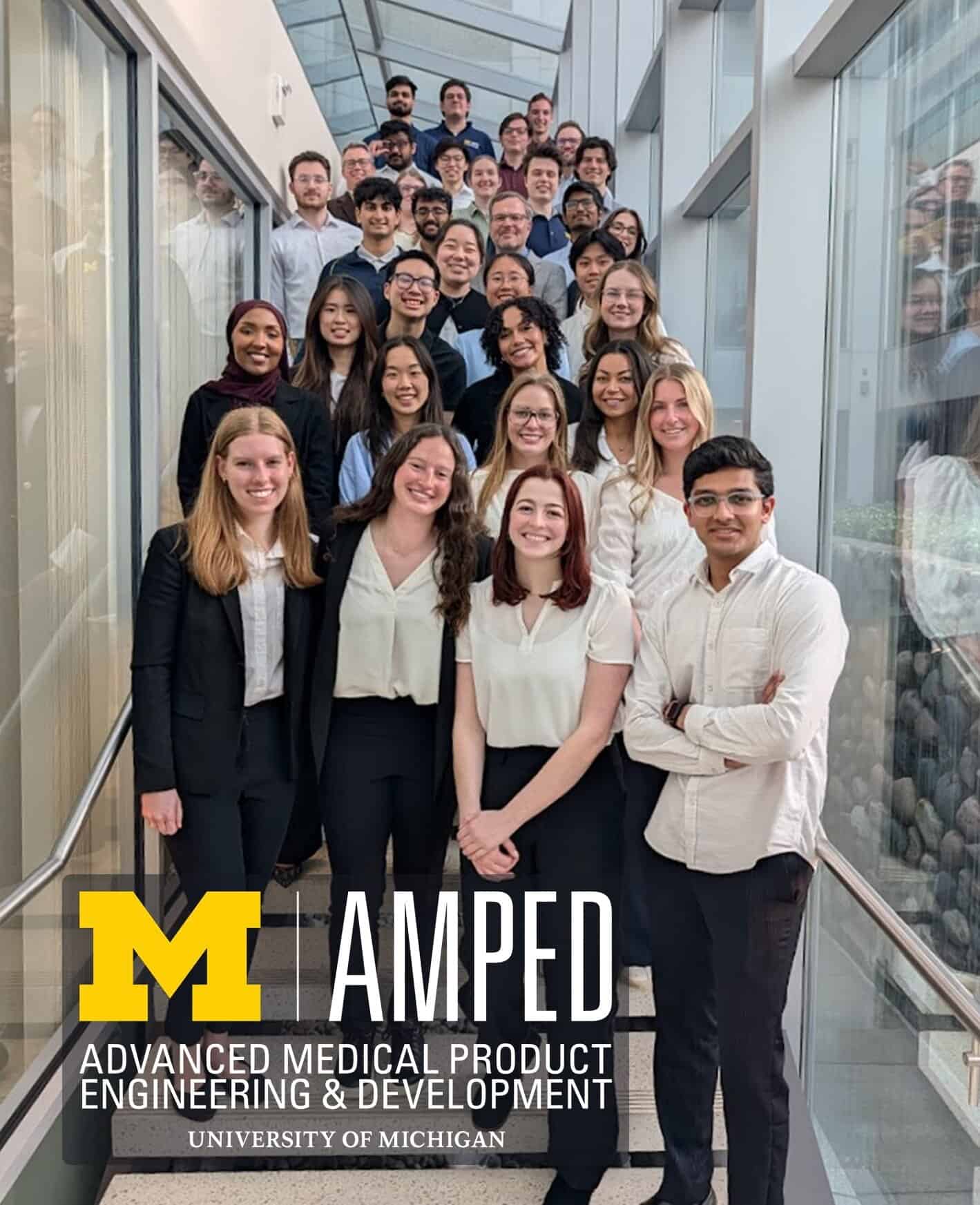
AMPED typically enrolls about 25 to 30 students with a range of engineering backgrounds, as well as students with relevant non-engineering experience. Historically, many students came through U-M BME’s Sequential Undergraduate/Graduate Studies (SUGS) pathway, but broader recruiting has helped diversify the cohort. Last year, Dr. Stegemann said, the program reached an approximately even split between U-M SUGS students and students from external institutions—a balance the program plans to maintain.
Dr. Stegemann also hopes to attract more students from other engineering disciplines and related fields. “We would welcome more students from other engineering disciplines,” he said. “That adds intellectual diversity and a broader range of experiences to the classroom.”
As AMPED matures and the alumni base grows, more alumni are actively returning to give back to the program through their time and experience. Graduates often return as guest speakers, panelists and mentors, helping current students understand specific roles and pathways in the medtech industry. “Our alumni are wonderful— very generous with their time and expertise, and eager to help the students following in their paths,” Dr. Stegemann said.
The AMPED cohort forms a strong sense of professional community, and has built a broad network of alumni and medtech industry professionals who support the program and the career development of its graduates. The broader community connected to AMPED and its predecessor courses now includes more than 400 alumni in a LinkedIn group. That network gives Dr. Stegemann and his colleagues a growing pool of professionals who can speak to current students about topics ranging from AI and manufacturing to regulatory affairs and career development.
Looking ahead, AMPED continues to evolve with the changing landscape of the medical technology industries. The program is expanding to new technology areas and working with industry partners to understand the needs of their enterprises. Dr. Stegemann said future growth could include projects or courses related specifically to biotech products and pharmaceuticals, as well as potential opportunities for continuing education, online learning or stackable credentials for working professionals.
For now, the program remains focused on its core mission: giving engineers the practical, clinical, and industry-informed preparation they need to contribute meaningfully to medical technology.
Applications to the next round of the AMPED program open in mid-September and are due by January 15. Those interested in augmenting their education in medical product development are encouraged to apply. Readers who have feedback on the program or would like to be involved may contact Jan Stegemann at [email protected].