
Alumni & Partners
Networking and Connecting
Alumni Updates
BME Alumni Merit Award Winners
- 2026 – Sean Chambers
- 2025 – Hubert Lim
- 2024 – Caroline Dugopolski
- 2023 – Auresa Thomas McGill
- 2022 – Victoria Augustine
- 2020 – Jeffrey Jamison
- 2019 – Jon Rowley
- 2018 – Lisa Kurek
- 2017 – Predrag Sukovic
- 2016 – V. Kadir Kadhiresan
- 2015 – Dianna Cody
- 2014 – Scott Merz
- 2013 – Timothy Kriewall
- 2012 – Barry Bochner
- 2011 – Monique K. Mansoura
- 2010 – James Pipe
- 2009 – Patrick Crane
- 2008 – James W. Albers
- 2007 – Spencer Bement
- 2006 – Mark Sutter
- 2005 – Gregg E. Trahey
- 2004 – Robert G. Radwin
- 2003 – Burks Oakley
- 2002 – Steven A. Goldstein
- 2001 – David A. Vogel
- 2000 – Alfred L. Nuttall
- 1999 – Gregg K. McPherson
- 1998 – William J. Heetderks
- 1997 – Walter H. Olson
Sean Chambers Receives 2026 U-M BME Alumni Merit Award
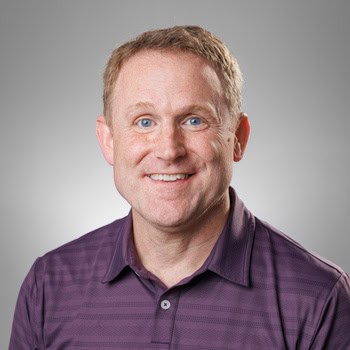
U-M BME is proud to announce Sean Chambers, Ph.D. ’98, as the recipient of the 2026 BME Alumni Merit Award.
This honor recognizes an alumnus who has demonstrated outstanding leadership, scientific achievement, and a lifelong commitment to translating engineering innovation into clinical impact. Chambers, Director of Research & Development for the Interventional MRI division at Cook Medical, has spent nearly three decades building a career that reflects the Michigan BME spirit: collaboration across disciplines, rigorous engineering, and a focus on improving patient care.
For Chambers, the recognition is both meaningful and unexpected.
“I was very humbled,” Chambers said. “When I think about the caliber of peers I know who graduated from the University of Michigan and what they’re doing in their careers, it’s very humbling to think that I would be considered for this. I’m grateful to have this honor and to be able to represent the department in this way.”
A Michigan Connection, Rooted in Family and Opportunity
Chambers’ Michigan story began before he ever arrived in Ann Arbor. His mother was born and raised in Detroit, and Chambers and his sister were born in Warren, Michigan, before the family moved to Indiana. Although he grew up outside the state, southeastern Michigan remained familiar territory — and the University of Michigan held a special place.
“I’ve always been a fan of U-M,” Chambers said. “A friend of mine just sent me a picture from my senior year of high school, and I was wearing a University of Michigan sweatshirt. I remember watching the 1989 national championship basketball game with my mom. But I never thought of that being a university I could attend.”
As an undergraduate studying mechanical engineering at Rose-Hulman Institute of Technology, Chambers became increasingly interested in biomedical applications. At the time, biomedical engineering was still an emerging field, and he sought guidance from mentors about where to pursue graduate training. One mentor, Sam Hulbert, then president of Rose-Hulman and a biomaterials instructor, advised him to look for universities with both a top engineering school and a top medical school — and, importantly, a place where the two truly collaborated.
“University of Michigan had all that on one campus,” Chambers said. “A top-tier medical school, a top-tier engineering school, and people who actually functioned together. That was a big factor in my decision.”
A visit to campus confirmed the fit. Chambers recalled being struck by the depth of resources, the collaborative environment, and the people who helped him find his way into the program. He ultimately joined the lab of Dr. Robert Bartlett, the pioneering surgeon and ECMO innovator, with additional mentorship from BME alumni Scott Merz, engineering faculty Matt O’Donnell and David Kohn, and Steven Ceccio in Mechanical Engineering.
“I never envisioned, as an engineer, that I would have a surgeon be my direct advisor,” Chambers said. “But that seemed valuable for where I wanted to go. Dr. Bartlett would give me these clinical challenges — things that were needed clinically — and then I had to learn how to form the right engineering approach. That training was remarkable.”
Learning Collaboration at the Source
Chambers arrived at Michigan during a pivotal moment for biomedical engineering. At the time, U-M’s bioengineering program had already built a national reputation, but the field itself was still emerging. Chambers was a student during the Whitaker Foundation process that helped transform U-M’s program into a department and expand its educational mission.
“It was a very dynamic time at Michigan,” Chambers said. “The field was still forming, and I was able, as a student, to be part of the process Michigan went through to receive the funding that created the department. I remember the debates: Should we become a department? Should we offer undergraduate degrees? Would we lose what we are if we do that?”
Those conversations left a lasting impression.
“Michigan just provides so many experiences because of the different campuses and schools that are all there together, and they collaborate across each other,” he said. “As I look back at my career, I was able to use those experiences.”
That model of cross-disciplinary problem solving became a throughline in Chambers’ career. He credits Michigan with teaching him that engineering impact depends not only on technical excellence, but on the ability to assemble the right mix of people — clinicians, engineers, business experts, regulatory specialists, and others — to solve meaningful problems.
“One of the greatest things I learned at Michigan was that, yes, you’re an engineer, but your goal is to bring in the right people, the right experts, and help solve the problem,” Chambers said. “Michigan teaches that so well.”
Pioneering Interventional MRI at Cook Medical
Since joining Cook Medical in Bloomington, Indiana, Chambers has focused on applied research and product development, working closely with clinicians and university collaborators to advance new medical technologies toward commercialization.
Today, as Director of R&D for Cook Medical’s Interventional MRI division, Chambers is helping lead an emerging area of image-guided intervention. Interventional MRI, or iMRI, uses magnetic resonance imaging to guide minimally invasive procedures, offering an alternative to imaging modalities such as fluoroscopy, CT, or ultrasound.
Chambers has been involved in Cook’s iMRI efforts for more than a decade. What began as a research program eventually developed into a formal collaboration involving Siemens Healthineers and led to the creation of a dedicated iMRI division at Cook Medical. The division, established in 2024, is now advancing its first commercial products.
“We are taking and commercializing devices into interventional MRI,” Chambers said. “How do we do key interventional procedures using MRI to guide us, as opposed to fluoro, CT, or ultrasound? My role is the senior R&D role that owns both research and development and new product development.”
In 2026, Chambers and his team are focused on introducing the division’s first products and supporting the launch of an iMRI procedure suite with Siemens Healthineers.
“We launched the procedure suite this year with Siemens, which is the environment in which you can work, and now we’re bringing devices into that environment,” he said. “A big part of my role is university collaboration — helping form those collaborations and guide them — and using that work to direct early research and pre-development for future products.”
Among those collaborations is sponsored research with the University of Michigan, including work connected to the Department of Radiology.
For Chambers, the work represents the type of translational engineering he first learned to value in Ann Arbor: identifying a clinical need, building a multidisciplinary team, and developing technology that can move from concept to patient care.
From Ann Arbor Innovation to Global Markets
Chambers’ experience translating research into medical products began soon after he earned his Ph.D. in Bioengineering from U-M in 1998. After a year as a visiting lecturer in Mechanical Engineering at the National University of Ireland, Galway, he returned to Ann Arbor and joined MC3, Inc., a medical technology incubator founded by Scott Merz, Patrick Montoya, Ph.D., and Dr. Bartlett which was focused on bringing university-derived technologies to market.
At MC3, Chambers served as a research manager and principal investigator on seven NIH Small Business Innovation Research grants, securing approximately $2.5 million in funding. His work included the BioLung™ artificial lung technology, which contributed to the founding of Germany-based NovaLung GmbH in 2003. NovaLung later exited through a sale to Xenios in 2013.
The MC3 experience deepened Chambers’ understanding of the long, complex path from university invention to clinical and commercial impact.
“I’ve mostly been on the research side — applied research — trying to advance new concepts and new technologies into devices,” Chambers said. “That means working with clinicians, working with universities, and trying to move ideas into something that can ultimately be commercialized.”
The lessons from Michigan were never far away.
“U-M holds you to a very high bar,” Chambers said. “There was a lot of emphasis, even in technical classes, on writing, articulating your ideas, forming a scope, and supporting it with objective evidence. It’s easy to find strong technical people. It’s harder to find people who can work in a team, articulate their ideas, and listen.”
A Global Academic Foundation
Chambers’ year in Ireland also reflected the influence of his Michigan training. As a visiting lecturer at the National University of Ireland, Galway, from 1998 to 1999, he helped develop an early biomedical engineering curriculum and co-authored a multidisciplinary grant that contributed to the establishment of Ireland’s National Centre for Biomedical Engineering Science.
He said the collaborative model he experienced at U-M helped him communicate the value of bringing engineering and medicine together.
“I was able to look back at what I learned at U-M about cross-pollination and collaboration,” Chambers said. “I think that’s really why they chose me at that time.”
Chambers has continued to contribute to the profession through leadership and service. He is an AIMBE Fellow and a member of the American Society of Mechanical Engineers. He has also remained engaged with U-M BME through alumni and industry advisory roles, student mentoring, and involvement with translational programs, including Coulter-related initiatives.
He said those opportunities give him as much as he gives back.
“I have gotten to be part of the Industry Advisory Board and work with VP-level individuals at major corporations,” Chambers said. “The mentoring you receive from being involved like that is very impactful. And because there are so many Michigan people throughout the industry, those connections are significant.”
“Ann Arbor Feels Like Home”
Although Chambers has built much of his career in Indiana, he has remained closely connected to Ann Arbor — professionally, personally, and, naturally, athletically.
“Going back to Ann Arbor is always special,” he said. “It definitely feels like home.”
Advice for the Next Generation
For current U-M BME students and young alumni interested in medical device research, development, and translation, Chambers encourages embracing the breadth of the Michigan experience.
He emphasized that technical training matters deeply — but so do communication, collaboration, humility, and the ability to learn from people outside one’s own discipline.
“Michigan challenged us to think differently,” he said. “The way the program was structured required you to seek out medical input, engineering input, and other perspectives. It was daunting as a student, but I look back on it and realize that’s precisely what I do every day now.”
His advice: take advantage of the full university experience.
“Michigan is one of the greatest universities in the world because it is the sum of its parts,” Chambers said. “You have top engineering, medicine, business, law, liberal arts — all together. If you embrace that breadth, it can have a huge impact on you.”
2025 U-M BME Alumni Merit Award Honors Dr. Hubert Lim
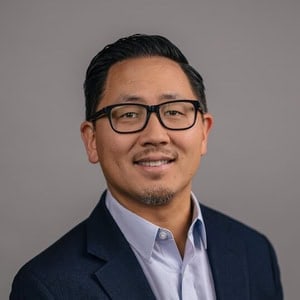
Hubert H. Lim (MSE, ‘02, Ph.D. ‘05) is the distinguished recipient of the 2025 BME Alumni Merit Award, recognizing his transformative contributions to neurotechnology, hearing and tinnitus solutions, innovative whole-person health interventions, and leadership in MedTech entrepreneurial translation. He will receive the honor on October 3 as part of Homecoming Weekend activities.
A leading scientist and innovator, Dr. Lim’s journey reflects the interdisciplinary spirit and collaboration that define Michigan BME. Currently Professor of Biomedical Engineering and Otolaryngology at the University of Minnesota, and Director of the Earl E. Bakken Medical Devices Center, Dr. Lim is internationally known for bridging the boundaries among engineering, medicine, and commercialization.
“There’s no doubt that Michigan was the catalyst for my career,” Dr. Lim said. “The exposure to forefront neurotechnology, the supportive collegial environment, and the breadth of mentorship I received—all of that shaped who I am as a scientist.”
A Path Inspired by Family, Music, and Medicine
Growing up in Southern California, Dr. Lim’s path into biomedical engineering was inspired by a convergence of family influences: a relative’s health challenges, and a mother trained as a pianist, who enjoyed classical music and church hymns–although Dr. Lim himself preferred pop, techno, hip-hop and other genres. “Music intrigued me—not just how we perform or enjoy it, but what happens in the brain, why people have such different preferences,” he said. “That fascination with both health and the mind-body connection led me to bioengineering.”
Dr. Lim completed his undergraduate degree in bioengineering at UC San Diego, then chose Michigan for graduate studies—earning an MSE and then a PhD in biomedical engineering, and an additional master’s in electrical engineering and computer science, during his time in Ann Arbor from 2000-2005.
Building the Future of Hearing Restoration
Though Dr. Lim had begun his time at Michigan contemplating novel ways to track music perception in the brain, the pioneering cochlear implant research at the Kresge Hearing Research Institute ignited a new passion. “It was incredible: you could literally restore hearing in people with profound deafness—enabling many to have intelligible conversations after years of silence,” Lim recalls. “I shifted 1,000% in that direction,” he added, crediting the world-class community at Michigan for being open to new challenges and opportunities.
Yet even as cochlear implant technology revolutionized hearing restoration, Dr. Lim recognized key limitations in electrical stimulation through the bone. “It’s Physics 101: electrical currents spread by the path of least resistance, and getting focused activation through the bone to the auditory nerve on the other side is tough. So I set out to go closer and stimulate the auditory nerve and brain directly,” he says—a pursuit that defined his doctoral, postdoctoral, and early faculty research.
A unique opportunity enabled Dr. Lim to bridge preclinical research at Michigan with pioneering clinical studies in Germany, working alongside experts such as Dr. Thomas Lenarz. “I was fortunate to do animal and technology development at Michigan, then immediately observe and run clinical trials overseas,” Dr. Lim said. This unusual start provided him with first-hand experience in technology translation—a hallmark of his later career.
From Auditory Implants to Innovating Holistic Health
After his postdoctoral work, Dr. Lim joined the University of Minnesota in 2009, attracted by its robust and leading MedTech ecosystem and as the first hire into the Institute for Translational Neuroscience. There, his research split into two major branches: pushing the frontier of auditory prosthetics and developing novel treatments for tinnitus—both through invasive and non-invasive means.
His lab continues to develop implantable auditory prosthetics, such as a novel type of auditory nerve implant that is currently funded by NIH and approaching a first-in-human study after a decade of technology development and preclinical studies. However, on the tinnitus front, Dr. Lim sought to reach beyond surgical implants. “I wanted to make solutions affordable, accessible, and non-invasive for the millions affected,” he notes. Recognizing the brain’s interconnectedness, he pioneered multimodal approaches—stimulating tactile, visual, or other sensory pathways to modulate auditory neurons. “We realized the brain’s auditory circuits can be influenced by many other inputs—offering new hope for people with tinnitus.”
This work led to technology startups and, crucially, devices that today are benefitting patients—a testament to Lim’s commitment to impact and translational research.
But Lim’s curiosity did not stop there. “Tinnitus, for example, is never just a ‘hearing disorder.’ We found that stress, anxiety, sleep, immune function, even the gut microbiome all play a role,” he explains. That insight propelled his lab toward the paradigm of whole-person health: “You can’t treat just one symptom. You have to look at the entire biological and behavioral context.”
Backed by the Department of Defense, DARPA, NIH, and ARPA-H, his group broke new ground discovering that non-invasive ultrasound could directly stimulate cells in the spleen to control inflammation. “It’s amazing. By applying ultrasound externally, we can tell your own immune cells to reset—without drugs or implants. The potential for autoimmune diseases, long COVID, and more is enormous,” Dr. Lim said.
His team’s pioneering work has spawned high-profile papers, ongoing clinical trials for rheumatoid arthritis and other conditions, and new startups translating these discoveries into patient care.
Translating Research, Scaling Impact
Dr. Lim’s career is defined by pursuit of translation: “Michigan gave me an early taste of entrepreneurship. I attended their first programs, filed my first patent, and even took a class in patent law,” he said. “That inspired me to keep pushing for impact beyond publications.” At Minnesota, he now bridges academia and industry as director of the Earl E. Bakken Medical Devices Center, supporting invention, prototyping, and startup formation across campus and beyond.
He is also a principal leader in the MedTech 3.0 consortium in Minnesota, uniting industry leaders and academic partners to accelerate technology from lab to clinic. “The ‘Valley of Death’ is real for new devices. Our mission is to help researchers and startups navigate those hurdles so that more ideas reach the patients who need them.”
Softer Skills: The Michigan Difference
In addition to technical excellence, Dr. Lim credits Michigan for teaching him the value of collaboration, humility, and open-mindedness–and having fun. “The neurotechnology community there was special—people were humble, supportive, excited to work together. It was never cutthroat,” Dr. Lim noted. “Those relationships, the ability to team up across disciplines, that positive energy—those skills have been just as important to my success.”
He also fondly recalls hands-on learning at the old Kresge Institute by the U-M medical campus—“I was in the OR with clinicians my first year and late night experiments with a diverse group of technical, scientific and clinical colleagues that led to invigorating and creative discussions and ideas,” he said. “That cross-training primed me for a career bridging engineering and medicine.”
And there’s a unique perk about Michigan: “Football. I’m still a fan!” he added with a laugh. “It helped that the house I lived in was right near the football stadium and became the spot where tons of bright minds came to hang out for fun and brainstorm cool ideas.”
A Vision for Preventative, Personalized Health
Today, Dr. Lim is most excited about the potential of holistic health. “If we intervene earlier—by tracking sleep, stress, diet, activity—we can prevent many conditions rather than just treat late-stage disease,” he says. “With approaches like ultrasound stimulation of the spleen and certain types of cells, we let the body reset itself, gently. But we also need to address the root causes—sometimes tiny changes in daily habits make all the difference.”
He has recently integrated music therapy, meditation, and stress reduction into his lab’s treatment protocols, using technology to both monitor and support lifestyle interventions—completing the circle, in a way, to his musical upbringing.
Legacy and Impact
For Dr. Lim, receiving the Alumni Merit Award is personal and profound. “My Michigan experience is close to my heart. I still visit regularly—my wife’s from Michigan—and I remain inspired by the excellence, the camaraderie, and the spirit of impact that shaped me there. It’s a true honor to be recognized by the place that launched my journey.”
Caroline Dugopolski Named 2024 BME Alumni Merit Award Recipient
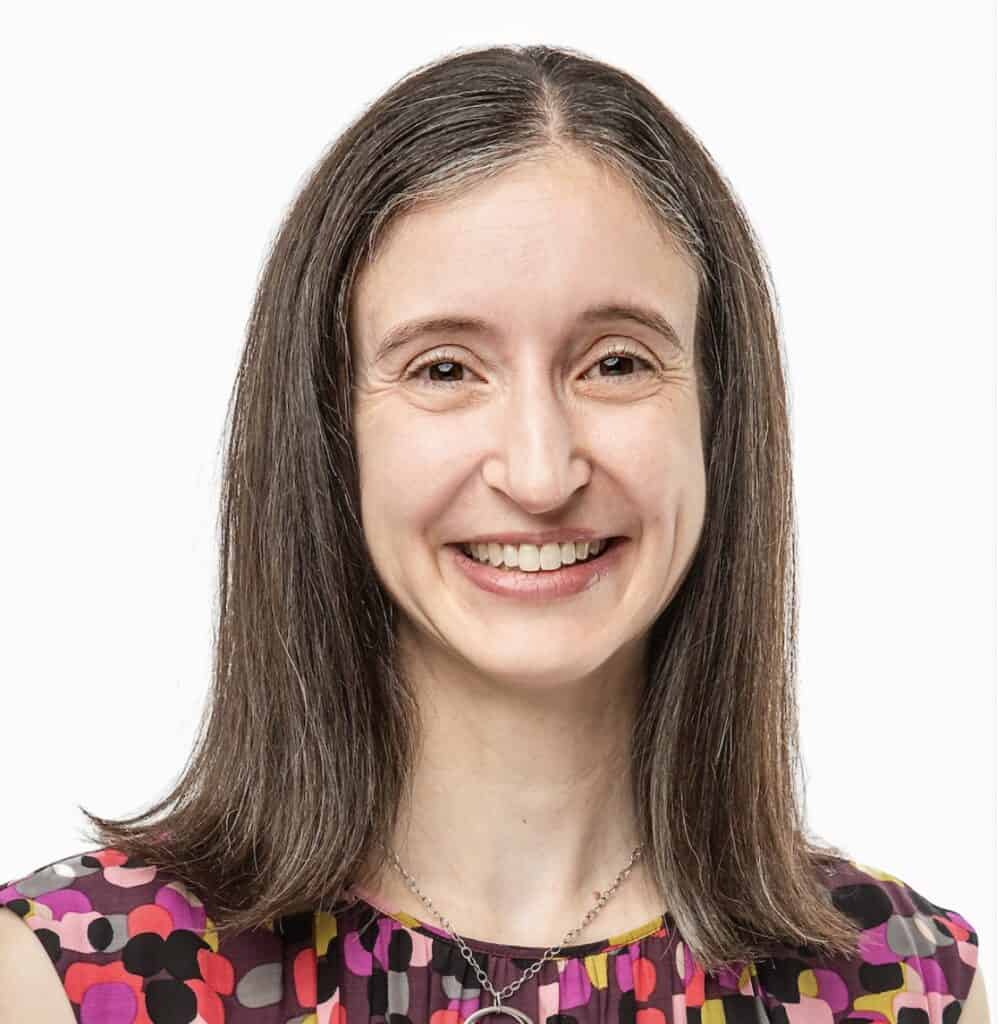
Congratulations to Caroline Dugopolski, B.S.E. 2000 Chemical Engineering – U-M, and M.S.E. 2001, Biomedical Engineering – U-M, who is the 2024 BME Department Merit Award recipient.
The College of Engineering established the Department Merit Awards to honor alumni who personify Michigan Engineering’s tradition of excellence and who have achieved significant accomplishments in their professional lives. The awards are given each year to graduates from each academic department.
Dugopolski is Vice President, Head of Bioprocess & Technical Operations at Cellino Biotech. She was honored with other College of Engineering department recipients during alumni awards activities on Homecoming Weekend, which was Friday, September 13 through Sunday, September 15.
“I felt both surprised and honored to have been selected for this award,” Dugopolski said. “There are countless paths that can be taken in a biomedical engineering career, and I appreciate the opportunity to represent a biomanufacturing path.”
Dugopolski said that she knew she wanted to pursue engineering when entering college, but was initially unsure of which area in the profession she wanted to focus. “At the time, there was no undergraduate BME program, so I ended up choosing to study chemical engineering (ChE) and found myself drawn less to traditional ChE applications and more to the biological interfaces,” she said.
Dugopolski had several undergrad experiences that fostered her interest in leaning toward BME: a UROP (Undergraduate Research Opportunity Program) project in which she worked in a lab at the medical school; a ChE lab class in which she took on a project that had biomanufacturing applications; and a seminar in which she learned about biotechnology. “When I found out that there was a CUGS (Concurrent Undergraduate/Graduate Status) program that would allow me to earn a BME Master’s within five total years of study, I went for it,” she added.
Dugopolski credits U-M for teaching her critical thinking and effective communications skills. “Critical thinking skills play a significant role in biomanufacturing operations in everything from troubleshooting technical problems to long-term strategic planning,” she noted. “Communication skills that I practiced in school, such as technical writing, data illustration, and verbal presentations, remain a key part of my day-to-day job. On a technical level, the introductory knowledge that I gained in topics such as bioprocess unit operations, process controls, drug development, and regulatory guidelines helped to get me started in industry.”
In her work, Dugopolski aims to demonstrate the core values of her employer, Cellino, which encourages teams to: seek unity, be brave, and show kindness.
She advises that U-M BME students aspire to these values in their education and future professional endeavors. today can aspire to these values in their education and future professional endeavors.
Homecoming Events Honor 2023 BME Alumni Award Recipients
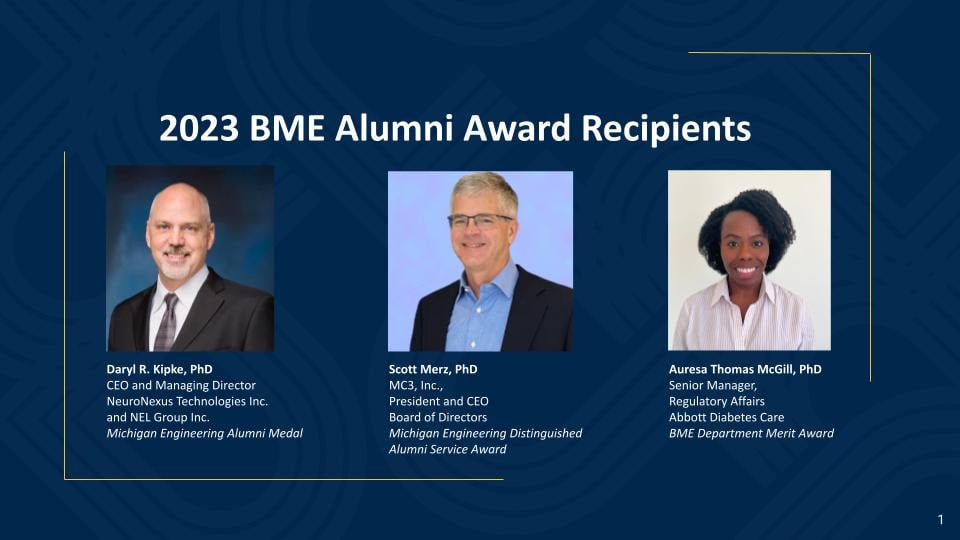
Congratulations to BME alumni Daryl Kipke, PhD; Scott Merz, PhD; and Auresa Thomas McGill, PhD, who received Michigan Engineering and BME alumni awards on Friday, September 22, 2023. Dr. Kipke received the Michigan Engineering Alumni Medal- the highest honor presented to an alum in the College of Engineering. Dr. Merz received the Michigan Engineering Distinguished Alumni Service Award, and Dr. McGill received the BME Department Merit Award.
Keep in Touch With U-M BME
Send us your updated contact information so we can keep you posted about our latest activities.
Alumni Perspectives
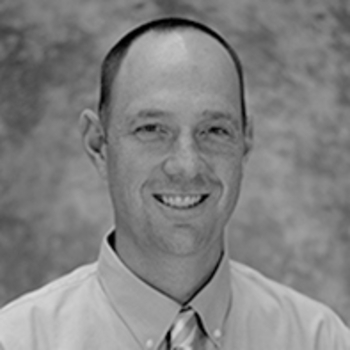
“Having an advanced engineering education had been an incredible tool for me to help see problems from all angles and to jump in and solve them.”
— Andrew Scott, Program Manager – Michigan Energy Department Improvement Collaborative
U-M BSE Materials Science and Engineerings, 2001; MSE Biomedical Engineering, 2001; MHSA Health Management and Policy, 2016
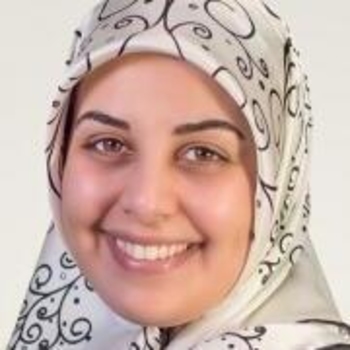
“I started doing research when I was a freshman at U-M through the UROP project and continued in the lab I was in through my second year. During my third year, I received the Sarah Maria parker Fellowship and worked in a lab that worked on developing multi-functional nanoparticles for drug delivery applications. I fell in love with the research and lab and decided to stay for my PhD. I was originally a pre-med student, but i really liked research and teaching and decided to become a faculty member.
— Sahar Rahmani, Research Scientist
Gilead Sciences U-M BSE Biomedical Engineering, 2010; MSE Biomedical Engineering, 2011; PhD Biomedical Engineering, 2015
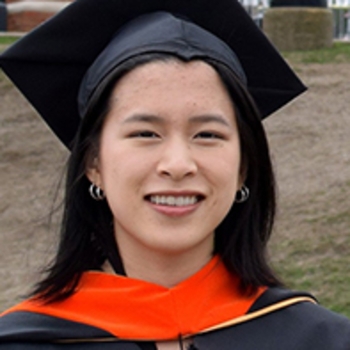
“There were several graduate projects that were helpful to me. First and foremost was my time in BME’s graduate medical device product development course (AMPED). I presented this project during my job interview, and I’m certain it was key in securing my job. It provided me with the strong background in understanding how products, not just medical devices, are developed and prepared for the processes used.”
— Rachel Sun, R&D Leadership Associate – Pall Corporation
U-M BS Cellular & Molecular Biology, 2018; MSE Biomedical Engineering, 2019