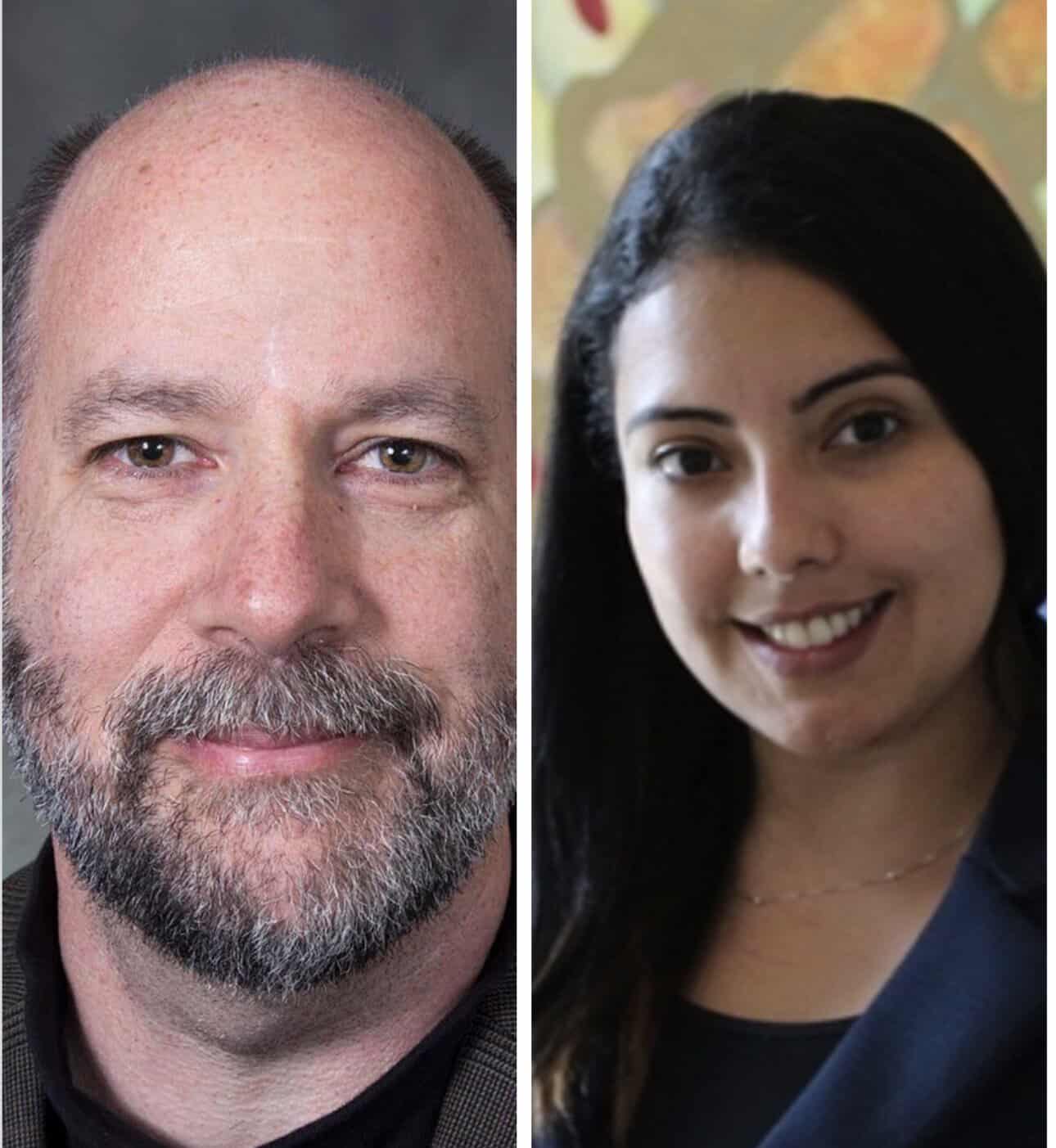
A recent Nature Custom Media feature highlights how University of Michigan researchers are breaking down disciplinary barriers to move regenerative medicine discoveries from the laboratory toward clinical care. The article featured U-M Biomedical Engineering faculty David Kohn and Maria Coronel, whose work demonstrates the value of connecting scientific discovery with clinical, regulatory and commercial expertise.
The university’s Ann Arbor campus encompasses a wide range of disciplines and schools, and is the only university in the U.S. with top 10 medical, dental and engineering schools on one campus. This makes it a magnet for attracting students and faculty, and ideally suited for such a collaborative model.
Dr. Kohn, Professor, Biomedical Engineering, Natalie C. Roberts Professor of Dentistry, and Professor, Biologic and Materials Sciences, recently co-authored a paper identifying three major obstacles to translating regenerative medicine discoveries: fragmented development pipelines, regulatory and manufacturing challenges, and limited funding. Addressing these barriers, he said, requires researchers to consider scientific, clinical, regulatory and commercial needs together.
U-M supports this approach through programs including the Biosciences Initiative, the Translational Resource Center and the Training Program in Tissue Engineering and Regeneration (TEAM). Together, these efforts connect researchers with expertise in clinical care, manufacturing, regulation and commercialization.
Dr. Kohn leads the Biosciences Initiative’s programmable biomaterials for regenerative medicine area and is a principal investigator in the Translational Resource Center. The U-M-led center, supported by a $31.4 million Federal grant, helps teams move technologies toward regulatory approval and commercialization.
That collaborative environment supports faculty including Dr. Coronel, Assistant Professor, Biomedical Engineering and principal investigator of the UNITY Lab. Her team uses biomaterials and protein engineering to understand—and potentially redirect—immune-system communication.
One project, GeLite, aims to detect transplant rejection earlier than existing monitoring methods. The technology combines a biomaterial, a light-emitting protein reporter and an antibody to detect cytokines—immune signals that can indicate rejection before changes in blood glucose or insulin dependence become apparent. Dr. Coronel’s lab will test GeLite using stored samples from U-M kidney transplant patients, a partnership made possible through connections with transplant surgeons.
U-M’s collaborative approach has already produced measurable results. Across the Translational Resource Center and its partner center in California, 44 projects have been supported, leading to 22 patents, eight startups and $74.5 million in follow-on funding. Several technologies have also received regulatory clearance or approval, while others are preparing for first-in-human studies.
Read the complete Nature article.