Honoring a Legacy of Discovery: The 2026 Alan J. Hunt Memorial Lecture
U-M BME’s annual lecture celebrates Alan J. Hunt’s enduring contributions as a scientist, educator and mentor.
2–3 minutes

U-M BME’s annual lecture celebrates Alan J. Hunt’s enduring contributions as a scientist, educator and mentor.
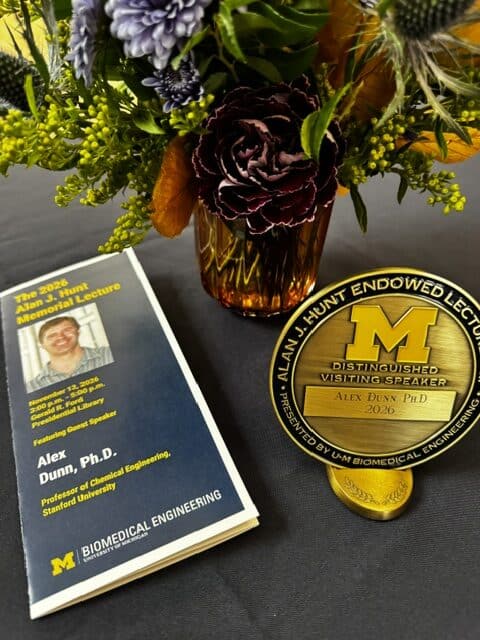
Alan J. Hunt’s legacy at U-M BME lives on through the students he mentored, the curriculum he helped shape and the scientific questions he pursued. On Friday, November 13, BME honored that legacy with the annual Alan J. Hunt Memorial Lecture at the Gerald R. Ford Presidential Library.
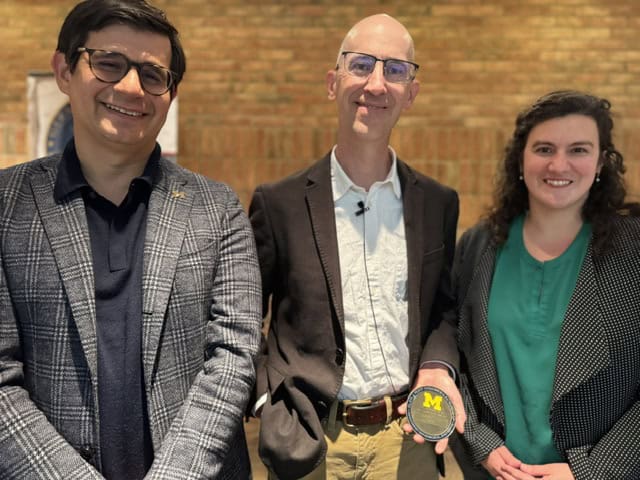
Featuring Alex Dunn, Ph.D., professor of chemical engineering at Stanford University, the annual lecture continues a tradition established to celebrate Hunt’s intellectual curiosity and contributions to biomedical engineering.
Endowed in 2013 by Dr. Hunt’s family, friends and colleagues, the lecture brings a distinguished scholar to campus each year who represents the intellectual standard Dr. Hunt achieved. It is a lasting tribute to a faculty member whose influence extended across research, teaching and mentorship.
Dr. Hunt joined U-M as an assistant professor in 1998, following doctoral training in biophysics at the University of Washington and postdoctoral work at the University of Colorado. He was promoted to associate professor with tenure in 2004 and to professor in 2010.
His research made significant contributions in three areas: microtubule self-assembly and mitosis, nanofabrication through ultrafast laser machining, and asymmetric stem cell division. Across these areas, his work explored fundamental biological processes and advanced tools for investigating and manipulating structures at very small scales.
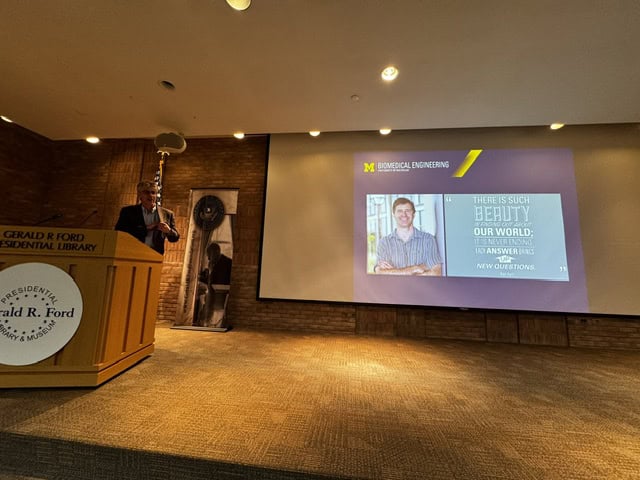
Dr. Hunt had a motto about the sense of discovery that animated his work: “There is such beauty in finding out about our world; it is never ending. Each answer brings up new questions.” That spirit of open-ended inquiry remains central to the lecture series bearing his name.
Dr. Hunt’s impact was equally meaningful in the classroom and through his mentorship with students.
He helped design a modern biomedical engineering curriculum with a strong emphasis on the principles of cellular and molecular engineering. That work connected engineering education to the fundamental processes of living systems.
The annual lecture remembers Dr. Hunt as a talented and inspiring teacher, as well as a caring and supportive mentor. He guided 10 doctoral students who went on to distinguished careers in academia and industry—extending his influence beyond U-M through their own research and professional contributions.
His legacy encompasses not only scientific discoveries, but also the people he supported and the educational foundation he helped build.
This year’s featured speaker brought a complementary perspective on the physical principles underlying biological organization.
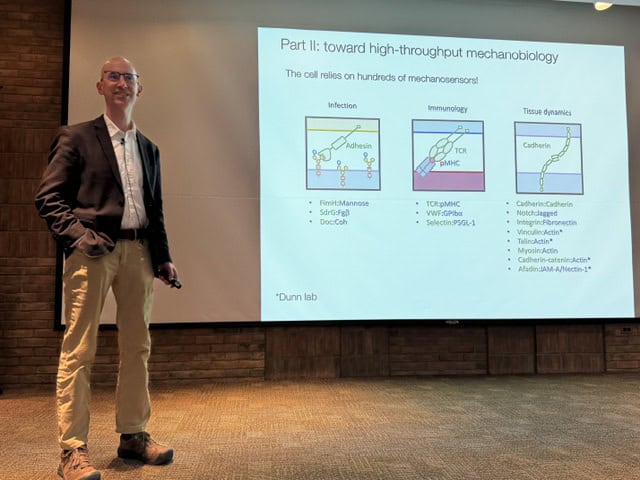
Dr. Dunn’s lecture, “Physical Principles of Cardiac Sarcomere Organization in Health and Disease,” focused on how molecular interactions and mechanical forces help organize the structures responsible for heart muscle contraction, and how inherited mutations can disrupt them. His laboratory’s broader research examines how living cells sense mechanical stimuli, with interests in stem cell biology and tissue engineering.
For Dr. Hunt’s family, friends, former students and colleagues, the annual lecture is a lasting tradition of remembrance—a way to share his enthusiasm for discovery with future generations of biomedical engineering researchers.