U-M BME Researchers Develop Nanoparticle Therapy to Boost the Immune System’s Attack on Metastatic Cancer
This innovation could mark a major turning point in how metastatic cancers are treated in the future.
3–4 minutes

This innovation could mark a major turning point in how metastatic cancers are treated in the future.
Researchers at U-M Biomedical Engineering, led by Lonnie Shea, Steven A. Goldstein Collegiate Professor, Biomedical Engineering, Ph.D. student Kate Griffin, and Jeff Ma, Ph.D., have published a study in Cell Biomaterials revealing a new approach to treating metastatic cancer using specially designed nanoparticles. This innovation could mark a major turning point in how metastatic cancers are treated in the future.
How the Research Works—And Why It Matters
Metastatic cancer is particularly deadly because it spreads to distant organs and establishes what scientists call “metastatic niches.” In these niches, immune cells, especially a group called myeloid cells (including monocytes and neutrophils), help the cancer settle and grow by creating a tumor-friendly microenvironment. These myeloid-derived cells actively block the body’s natural tumor-fighting T cells and interfere with pathways that help the immune system identify and attack cancer.
As Dr. Shea explained: “Metastatic cancer is associated with the immune system really establishing these niches within solid organs that allow for tumor cells to arrive without being destroyed by the immune system. It’s not just a one-time event— immune cells are constantly being recruited to these niches, which sustain the suppressive nature of that site and can ultimately allow tumor cells to grow in distant organs.”
While previous treatments have tried to bolster the immune system or attack the cancer directly, the U-M team took a different route: rewiring the immune cells themselves. By delivering nanoparticles into the bloodstream, the researchers were able to “reprogram” the circulating myeloid cells that travel to the metastatic niche, where they can then tip the balance in favor of the body’s natural defenses to clear metastatic cells.
Nanoparticles: Small Tech, Big Changes
The nanoparticles used in this study are made from poly(lactide-co-glycolide) (PLG), a material commonly used in medical applications, and formulated with polyvinyl alcohol (PVA). When these nanoparticles are injected into the blood, they’re taken up mainly by monocytes, a type of myeloid cell. These monocytes, after internalizing the nanoparticles and traveling to the lung, transform into monocyte-derived dendritic cells (moDCs).
Why does this matter? Dendritic cells are heroes in our immune system—they present pieces of the tumor to T cells, and identify the enemy, ramping up the body’s ability to fight back. The U-M study found that mice treated with these nanoparticles had more moDCs in their lungs, where breast cancer often spreads. These moDCs boosted the activation of important helper T cell types, which play key roles in anti-tumor immunity.
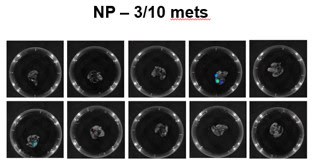
“We demonstrate in this paper that we can deliver particles to these circulating monocytes, and they become dendritic cells within the lung able to present antigen,” Dr. Shea said. “In the presence of T cells, we see that the tumor cells are cleared from the lung.”
A Step Toward Safer, More Effective Treatments
Current treatments for metastatic cancer—especially immune-based therapies—can cause serious side effects. As Dr. Shea explained, “Immunotherapies are exciting, yet their efficacy is limited to a subset of patients, with most patients having side effects. Thus far, our nanoparticles have not had those adverse events associated with immunotherapies. If we’re able to clear tumor cells without the side effects, that becomes a major victory.”
Next Steps
Eventually, clinical trials in humans are anticipated. If this finding demonstrates efficacy “it becomes another tool in the arsenal to combat metastatic cancer, which is the main challenge,” Dr. Shea said. “It also presents an interesting use case,” added Ph.D. student Griffin. “Many labs are working to engineer dendritic cell therapies ex vivo (outside the body). Here, we show you can use the body’s own mechanisms to boost the dendritic cell population for therapeutic purposes. This could have a wide range of uses beyond just metastatic cancer.”