U-M BME Team Uncovers Surprising Role of Antibody Diversity in Immune Protection
The Arnold Lab used computational modeling as an innovative way to approach this research into antibodies and vaccine responses.
3–5 minutes

The Arnold Lab used computational modeling as an innovative way to approach this research into antibodies and vaccine responses.
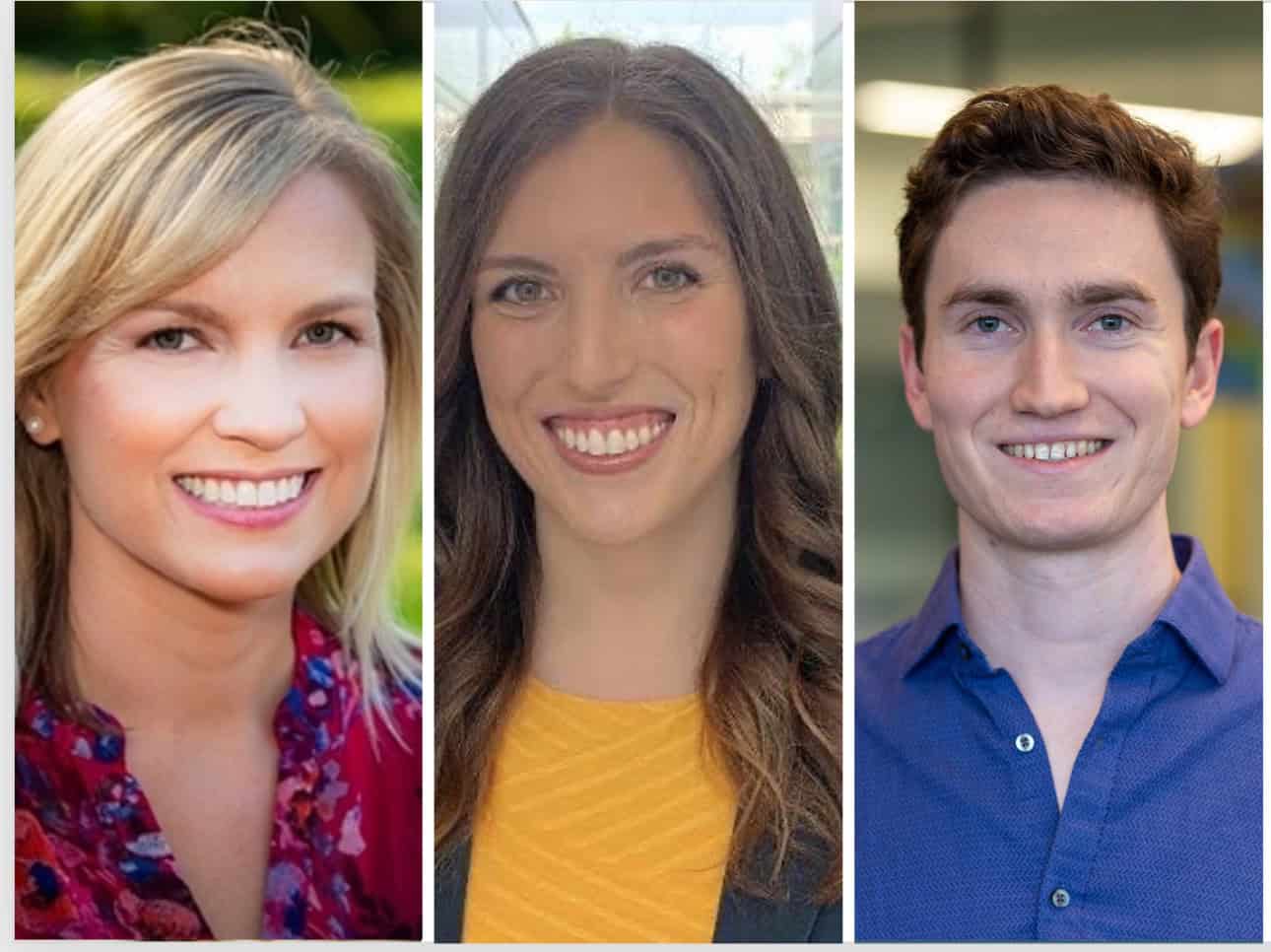
The way our bodies respond to infection and vaccines is more intricate than first meets the eye—a truth that’s fueling innovation in the lab of Kelly Arnold, Associate Professor, Biomedical Engineering. Dr. Arnold and her team’s latest research, recently published in Frontiers in Immunology, is changing the way scientists think about antibodies and vaccine responses.
The paper, co-authored by UM BME Ph.D. students Suzanne Schoffner-Beck and Robert Theisen, is focused on antibodies, the immune system’s defenders. Most people know antibodies for their ability to neutralize pathogens—“the ability of the antibodies to bind a pathogen and prevent it from infecting,” as Dr. Arnold explained. “But we actually study the other end of the antibody in this research.”
That “other end,” called the Fc region, is like the base of a Y-shaped molecule. It does more than just passively bind viruses or bacteria—it can signal immune cells such as monocytes and natural killer cells, telling them to wage an all-out attack.
New Models for a Complex System
Understanding these Fc effector functions is challenging, according to Dr. Arnold. The problem isn’t just the immune system’s complexity; it’s the vast variations from person to person. Genetic differences, immunization and infection history, and even the “sugar coating” (glycosylation) on each person’s antibodies shape how well they work.
The Arnold Lab used computational modeling as an innovative way to approach the issue. “The beauty of these models,” Dr. Arnold noted, “is that there are so many different features of the antigen, of the antibodies and of the Fc receptors, that can vary across different people. The model lets us isolate them and understand their relative contribution, and then we can also understand how they may contribute synergistically.”
In the new paper, the researchers have taken a leap forward by building an ordinary differential equation (ODE) model that predicts the formation of immune complexes activating two different Fc gamma receptors (FcgR). “Up until now, we could only look at one Fc receptor at a time,” Dr. Arnold said. “But a big emphasis in vaccine research is polyfunctionality—how can we activate multiple protective functions in parallel?” The new model offers the first step towards this goal.
More Isn’t Always Better
“I think the most surprising finding was that more antibodies are not necessarily better for more total function,” Dr. Arnold said. “There’s a competition that happens among all of these things that are interacting, and that competition can actually cause decreases in one function with increased antibody titers.”
Conventional wisdom in immunology has often focused on simply boosting antibody counts. But Dr. Arnold’s model shows that when different IgG antibody subclasses compete for both antigen and receptor binding, the immune system’s responses don’t always add up as expected. Sometimes, pushing too hard in one direction (such as elevating certain IgG subclasses) can subtract from the overall effectiveness.
Experimental simulations using data from an HIV vaccine trial underscored this insight: simulated boosting of IgG3 alone increased FcgR engagement upstream of ADCC responses but significantly decreased FcgR engagement upstream of ADCP. Meanwhile, simulations that boosted both IgG1 and IgG3 didn’t significantly change either function.
Personalizing Protection
One power of this computational framework is the revelation of the ways in which antibody actions vary depending on individual factors—genetics, vaccination history, or even conditions such as diabetes, which can alter antibody glycosylation. “Each person, with a different immune history, whether it’s vaccination or infection, or which variant they were exposed to, can really change the balance of the IgG subclasses,” said Dr. Arnold. The model lets researchers explore how people are different, beyond just averaging them in different groups. This potentially could be the first step towards truly individualized vaccine strategies or immune therapies
Looking Ahead
For now, advancing this line of research still requires significant investment. Among the near-term goals: modeling the effects of vaccine boosting over time, applying this methodology to diseases such as tuberculosis, and investigating how co-morbidities such as diabetes impact immune protection via changes in glycosylation.
The broader implication? The traditional “one-size-fits-all” vaccine approach may give way to strategies more closely tailored to each person’s unique biology—much as cancer treatments are being personalized today. “It is a small step in that direction,” Dr. Arnold noted. Every breakthrough in understanding cellular immunity brings scientists closer to safer, more effective, and more personalized vaccines and treatments.