Symposium Highlights Breakthroughs in Neural Engineering
This year’s presentations spanned from brain-computer interfaces and deep brain stimulation to regenerative peripheral nerve interfaces, spinal cord repair, machine learning, neural recording technologies, and neuroimaging.
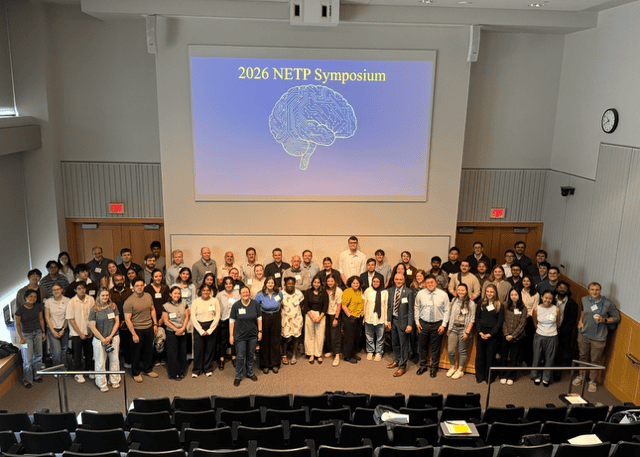
The Neural Engineering Training Program (NETP) held its annual symposium at the end of June, with a goal of showcasing the breadth of neural engineering research conducted by U-M trainees. This year’s presentations spanned from brain-computer interfaces and deep brain stimulation to regenerative peripheral nerve interfaces, spinal cord repair, machine learning, neural recording technologies, and neuroimaging. While the topics were diverse, the common thread was developing innovative technologies that help researchers better understand the nervous system and ultimately improve the diagnosis and treatment of neurological disease and injury.
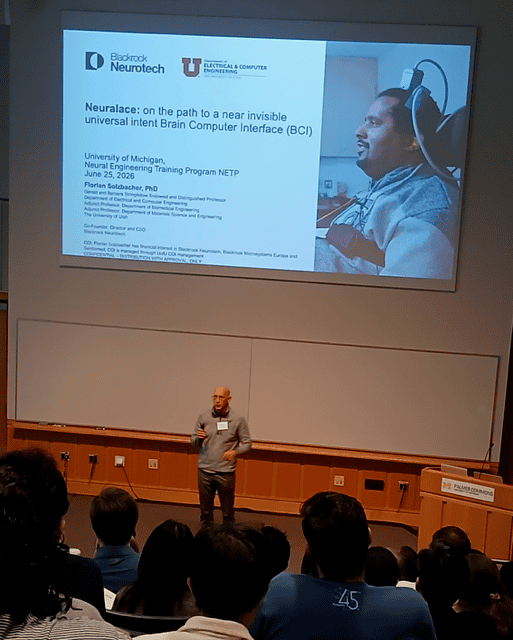
The highlight of the symposium was a Keynote lecture from Dr. Florian Solzbacher, titled “Neuralace: on the path to a near invisible universal intent brain computer interface”. In addition to his academic position as the Gerald and Barbara Stringfellow endowed professor of Electrical and Computer Engineering at the University of Utah, Dr. Solzbacher is the co-founder of Blackrock Neurotech, a pioneering company that has enabled over two decades of preclinical and clinical brain computer interface (BCI) research. Dr. Solzbacher shared some of the groundbreaking advances Blackrock has facilitated to date, and described his optimistic vision for the future of BCI.
Overall, there were three main takeaways from this year’s NETP Symposium:
Solving problems in neuroscience and medicine requires multidisciplinary collaboration—bringing together engineers, neuroscientists, clinicians, surgeons, computer scientists, and rehabilitation experts.
Researchers are driving remarkable advances in technologies that allow them to record from, interact with, and even repair the nervous system. Many of these ideas are moving closer to clinical translation.
Trainees should recognize the growing prevalence and diversity of opportunities within neural engineering and leave inspired by both the science and the people working in this field.
NETP is supported by an NIH T32 Institutional Training Grant from the National Institute of Neurological Disorders and Stroke. Organized by NETP fellows, the NETP symposium brings together students, postdoctoral fellows, faculty, clinicians, and engineers from across 20 U-M neural engineering groups to share research, exchange ideas, and foster collaboration. It also provides trainees an opportunity to present their work in a supportive environment while highlighting the broad range of emerging technologies in the field.