BME 419/519 Art Fair Spotlights the Beauty and Creativity of Human Physiology
Held on the final day of class, the event encouraged students to choose any physiological system covered during the term and interpret it through an original art piece made using any medium.
Students in BME 419/519: Quantitative Physiology concluded the Winter 2026 Term with an art fair that transformed course concepts into hands-on, visual—and often lighthearted—artworks inspired by the human body.
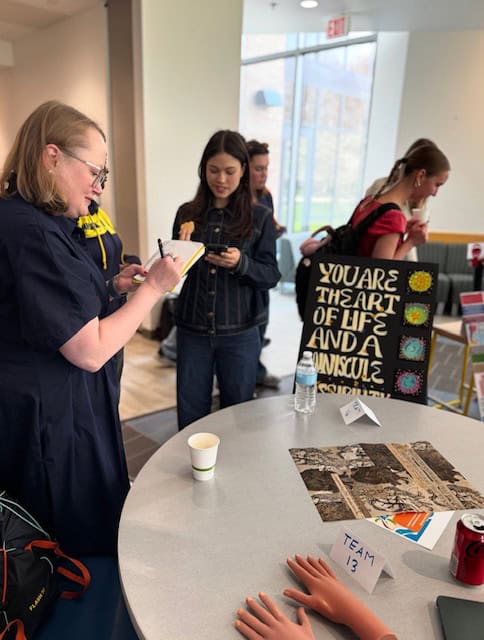
Held on the final day of class, the event encouraged students to choose any physiological system covered during the term and interpret it through an original art piece made using any medium. The result: 14 projects, ranging from interactive builds to physiology-themed games.
Theme: Human physiology as both functional and beautiful
The central theme of the Art Fair was celebrating human physiology through creativity—highlighting that the body’s systems are not just efficient and essential, but also aesthetically compelling. The projects encouraged students to synthesize scientific knowledge while viewing structure and function through an artistic lens. “We spend the entire term learning about the physiological systems (structure, function, etc.) that help our bodies run smoothly during daily life (or how they are disrupted in the context of disease),” said Alex Piotrowski-Daspit, Assistant Professor, Biomedical Engineering and Internal Medicine – Pulmonary and Critical Care Medicine Division, who served as the primary instructor for course this term, alongside guest lecturers: Anne Draelos, Assistant Professor, Biomedical Engineering and Computational Medicine & Bioinformatics; Carol Elias, Professor of Molecular and Integrative Physiology, and Obstetrics and Gynecology; Adam Abraham, Assistant Professor, Orthopaedic Surgery; C. Alberto Figueroa, Edward B. Diethrich Professor of Surgery and Professor, Biomedical Engineering, and Susan Brooks, Professor, Biomedical Engineering and Molecular and Integrative Physiology and Christin Carter-Su Collegiate Professor of Physiology, who all donated their time and expertise. “The art fair was an opportunity for students to appreciate the aesthetic beauty of human physiology and synthesize course content through a new lens.”
A different way to learn physiology
The activity was initially incorporated in the course to inspire students to appreciate the beauty of physiological systems and reinforce class content in a new format—one that values creativity alongside quantitative reasoning. The art fair also reflects a long-standing connection between learning physiology and visual expression. Dr. Piotrowski-Daspit noted her own experience using coloring and illustration as a tool for understanding anatomy and systems-level function.
What students take away
Beyond reviewing course material, the event emphasizes that:
Creativity belongs in science and engineering, not just in the arts.
Art can act as a universal language, making physiology more accessible and engaging to a broader audience.
Scientific understanding can be demonstrated in multiple forms—not only through equations, exams, or code.
Awards by popular vote
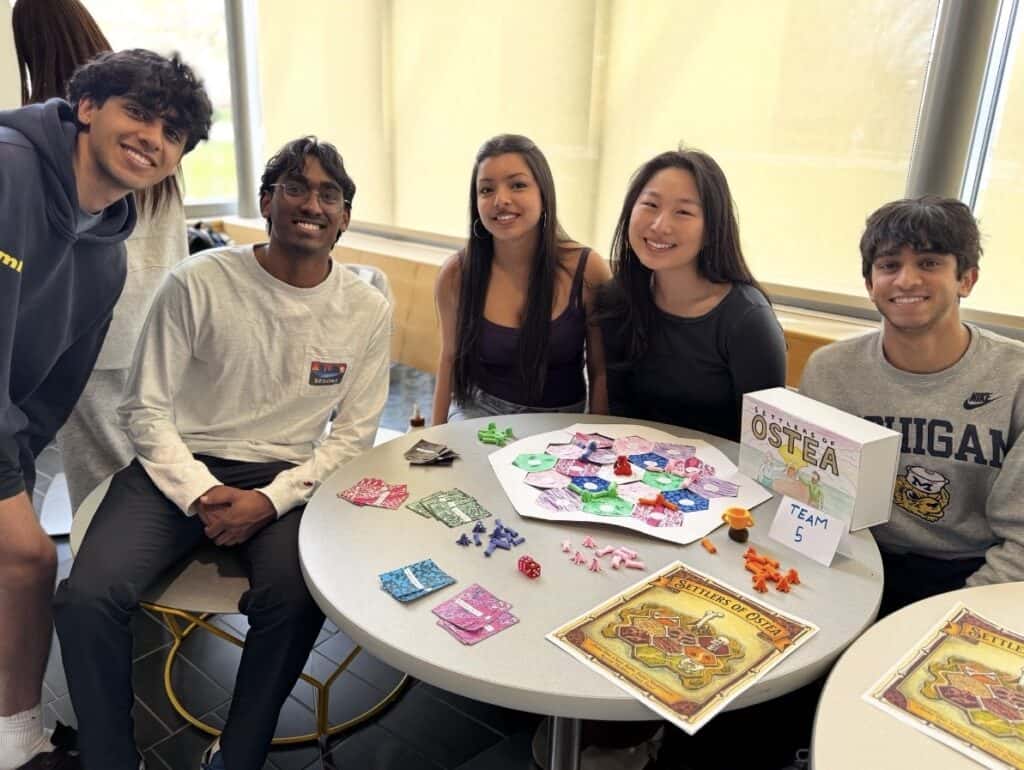
1st Place:Team 5 – “Settlers of Ostea” (a Settlers of Catan-inspired game integrating bone physiology) 2nd Place:Team 4 – “Physio” (an Uno-style game incorporating multiple physiological systems) 3rd Place:“GI Joe” (a marble run modeled after the gastrointestinal tract)
Honorable Mentions:
Most insightful:Team 6 – “The Uterus”
Most interactive:Team 14 – “BME 419/519 In a Brain Shell”
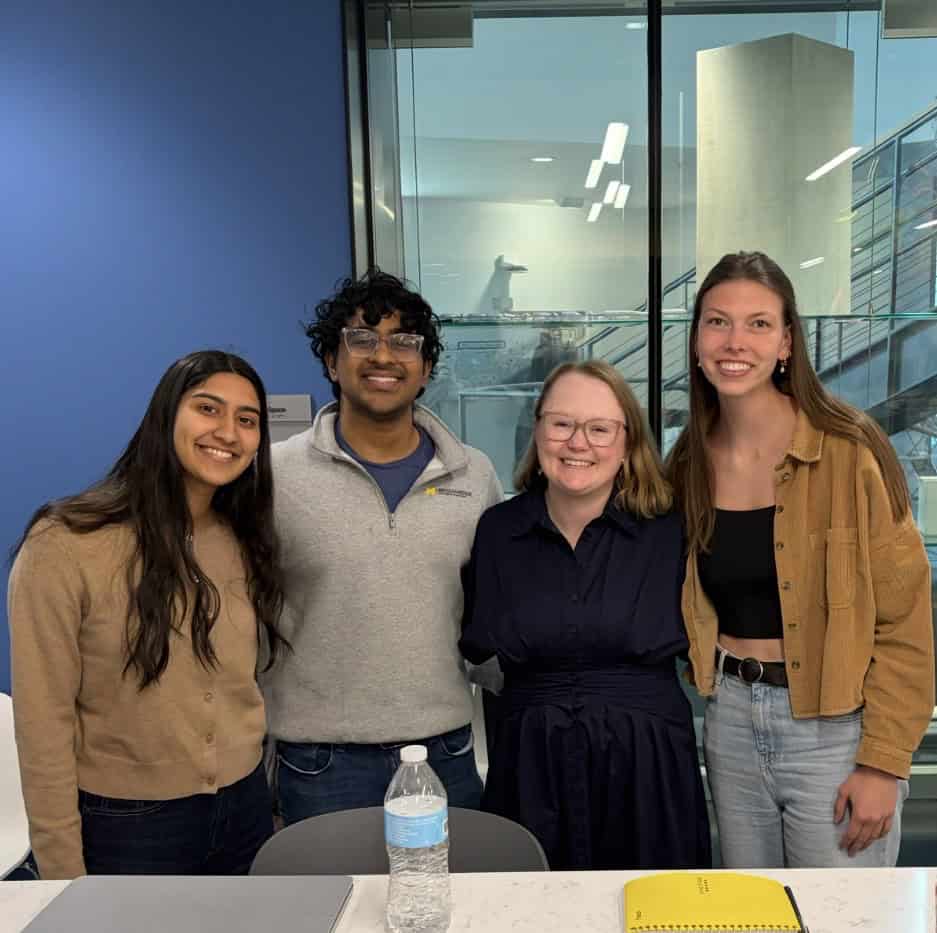
Dr. Piotrowski Daspit noted that the Art Fair is a highlight of the semester and intends to continue incorporating it as a long-term tradition in BME 419/519. The course also benefitted from a “fantastic teaching team,” including GSI Peyton Panovich and IAs Aditi Ganesan, Kavin Kukunoor, and Allison Risha.