BME Graduate Student Council Strengthens Community through Academic, Wellness, and Social Programming
The BME Graduate Student Council’s goal is helping students feel supported throughout the demands of graduate training
5–7 minutes

The BME Graduate Student Council’s goal is helping students feel supported throughout the demands of graduate training
From mentoring and qualifying exam preparation to wellness programming and signature social events, the Biomedical Engineering Graduate Student Council (GSC) plays a central role in fostering connections across the U-M BME graduate community.
“We develop and host events specifically for graduate students in the BME program, including master’s students, Ph.D. students, and postdoctoral fellows,” said GSC leader Gianna Paier. “Our programming centers on three themes—academic, wellness, and social engagement—and we also organize the annual retreat, new student orientation, and key components of the Ph.D. recruitment process.”
For Paier, the council’s work is grounded in a clear goal: helping students feel supported throughout the demands of graduate training. “A strong sense of belonging is essential for success in graduate school,” she said. “We aim to ensure students feel connected, supported by peers, and able to step outside the lab to build community.”
Department partnership that enables programming
Paier emphasized that GSC’s impact is strengthened by department partnership and resourcing. “I appreciate the support the GSC receives from the department,” she said. “The monetary and administrative support makes graduate students feel recognized, and it helps us sustain community-building efforts.”
She added that the council’s visibility and culture of engagement are also meaningful during prospective student recruitment. “It is one of the things we highlight most to recruits during Recruitment Weekend—that graduate students are involved and actively connect with one another,” Paier said. “That sense of community is a significant draw for many incoming students.”
Signature events that bring students together
GSC programming includes several traditions that have become fixtures of the graduate student experience in BME. Fall football tailgates offer an early opportunity for students to connect outside their research groups, while winter and spring events create additional touchpoints throughout the year.
“We consistently see strong participation in events that create shared experiences, particularly early in the academic year,” Paier said, pointing to tailgates as an accessible way for students to meet peers beyond their labs.
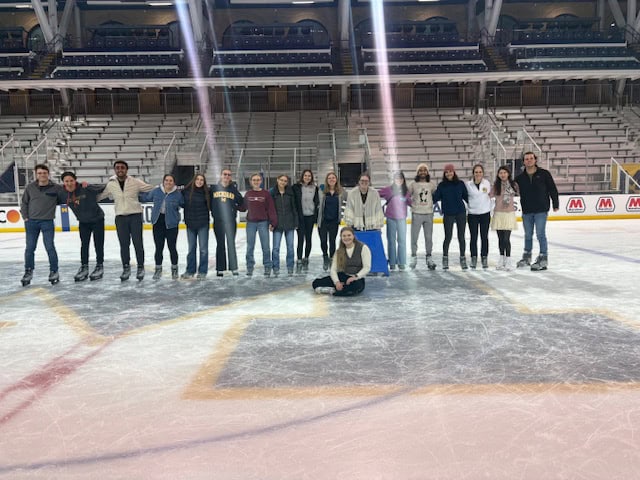
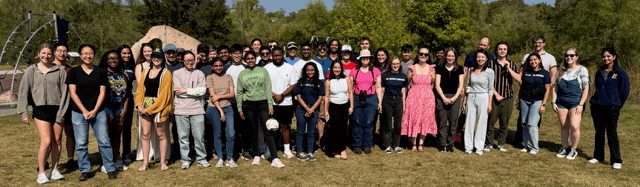
GSC leader Brian Hamp noted that annual events provide continuity for returning students while also welcoming newcomers. “We have several cornerstone events each year, including the fall football tailgates,” Hamp said. “In the winter semester, we host an ice skating event, and we are also preparing to hold the BME 5K again this spring.”
This year’s calendar also included additional opportunities for cross-department collaboration. Hamp helped organize a student-led Bake Off in conjunction with Chemical Engineering as an example of programming that reflects the interdisciplinary nature of BME. “Collaborative events are a valuable way to connect students whose research overlaps across departments,” he said.
Wellness and community support—inside and outside the lab
In addition to social events, the GSC designs programming aimed at well-being and connection—particularly during high-pressure parts of the academic year.
Hamp emphasized structured opportunities that support productivity and reduce isolation. “We host writing hours—often at cafés or at the North Campus Research Center—for students working on grants, manuscripts, or other major projects,” he said. “The goal is to provide a focused environment and a sense of shared effort.”
Paier also described wellness programming that blends community-building with opportunities to recharge, including outings such as arcade nights and events that encourage students to share aspects of their cultural identities and heritage. “These events are designed to help students connect beyond research and create space for smaller communities to be seen and supported,” she said.
Academic preparation and peer mentorship
Professional development and academic preparation are another major pillar of GSC programming. A peer mentorship program pairs more experienced graduate students with first- and second-year students, creating an informal advising channel for navigating early milestones.
“The mentorship program provides newer students with a supportive point of contact,” Paier said. “When I participated as a mentee, it was helpful to have someone outside my immediate support system who could offer perspective and practical advice.”
The council also organizes qualifying exam preparation sessions. “One of our major academic initiatives is a QE preparation night,” Paier added. “This event helps clarify expectations and gives students an opportunity to practice presenting to peers who have already completed the exam.”
Outreach and interdisciplinary partnerships
Beyond internal programming, the GSC supports outreach and cross-campus initiatives that broaden the department’s student engagement.
Hamp pointed to an ongoing partnership supporting tutoring through Avalon Housing. “We have continued to support outreach efforts, including tutoring with younger students in the area through Avalon,” he said, noting that the opportunity expanded after an initial pilot project.
The council also co-sponsors a student speaker series focused on bionics and biomedical engineering in partnership with the Biointerfaces Institute. “We are one of the sponsoring organizations for a student speaker series that brings together multiple disciplines to discuss engineered approaches to real-world challenges,” Hamp said.
Priorities for the year ahead
Looking forward, GSC leadership is focused on strengthening engagement among groups that can be harder to reach, including master’s students, international students, and postdoctoral scholars.
Hamp identified master’s student engagement as a key growth area. “We are working to better serve master’s students, including SUGS, AMDP, and traditional master’s pathways,” he said. “One planned addition is a master’s thesis information and preparation session, modeled on our qualifying exam programming, to help students understand expectations and make informed decisions.”
Paier noted additional plans to support incoming students—particularly those arriving from outside the United States—with practical guidance and early community connection. “We are developing a series of sessions for incoming students focused on integration into Ann Arbor—housing, course registration, and transportation,” she said. “We also hope to expand efforts such as airport pickup support when students arrive.”
Paier added that the council is also working to make programming explicitly inclusive of postdoctoral scholars. “We are being more intentional in how we communicate that our events are open to postdocs and that they are an important part of our community,” she said.
Sustaining connection throughout the year
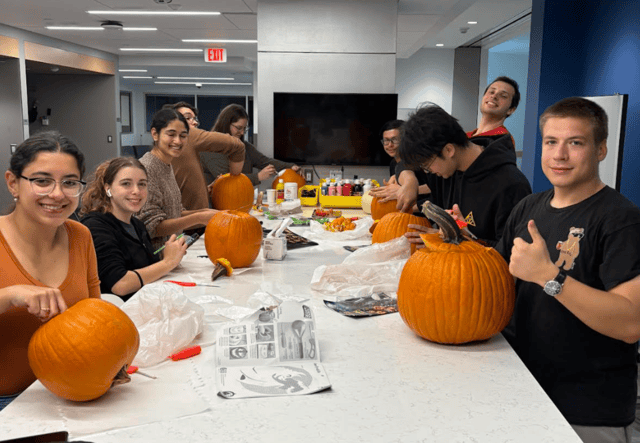
Hamp emphasized that GSC programming continues beyond the traditional academic year, providing a consistent community presence even when classes are not in session. “One strength of the GSC is that we remain active throughout the summer,” he said. “We aim to maintain opportunities for students to connect outside the lab, even when the usual academic structures are less prominent.”
With a broad portfolio of academic, wellness, and social programming—and department partnership that helps sustain it—the BME Graduate Student Council remains a key part of the department’s graduate student experience.