Go Blue, Go Global: U-M BME Students Transform Their Perspective Through International Programs in Engineering
Through Michigan Engineering’s International Programs in Engineering (IPE), students are part of a growing movement to combine rigorous coursework with rich cultural immersion.
For Michigan Biomedical Engineering (BME) majors, global education is more than a passport stamp—it’s a challenge to their intellect, a window into new cultures, and a way to reimagine their future as engineers. Through Michigan Engineering’s International Programs in Engineering (IPE), students are part of a growing movement to combine rigorous coursework with rich cultural immersion.
Michigan Engineering’s International Programs in Engineering office has made it their mission to break down barriers for students. “Our overriding vision is to provide experiential opportunities for all engineering students,” says Diane Saran, Associate Director of IPE. “We want to meet students exactly where they are, open pathways for global engagement, and ensure everyone—regardless of major or background—has access to international programs.”
Accessibility is foundational. “We’re constantly trying to expand,” added Eden Driscoll, IPE advisor. “Whether it’s helping with financial challenges, navigating academic requirements, or just mastering the logistics of living and learning in a different country, we’re here to guide students at every turn.”
For BME students in particular, careful program design means that global experiences can fit seamlessly into four-year graduation plans. “We work really closely with departments like BME,” noted Saran, “to make sure the right classes are available, the universities abroad are top tier, and credits transfer smoothly. Our office actually becomes experts in the engineering curriculum to help students identify courses and destinations that fit.”
Engineering abroad isn’t just about technical know-how. Driscoll emphasizes deeper goals: “There’s not just one right way to approach engineering. When our students go abroad, they see how other cultures solve problems or address healthcare challenges. These experiences don’t just benefit the individual—they enrich Michigan Engineering as a whole.”
That breadth is intentional. “We want students to go all over the world, not just to Europe,” Saran points out. “We’re always growing our partnerships—in Asia, Australia, South America, and Africa—to reflect Michigan’s global reach.”
IPE also works to dispel myths around affordability. “Cost is often a perceived barrier,” said Driscoll. “But U-M students can use their financial aid for semester programs and many summer programs. If you plan carefully, you might even find study abroad can be comparable—or cheaper—than a term in Ann Arbor.”
Preparing students for professional success after study abroad is another plank in IPE’s mission. “We help students market their global experiences to employers. Those soft skills—flexibility, problem-solving, cultural agility—are top priorities for industry,” Saran explained. “We hope every student comes home able to articulate how going abroad made them a better engineer and a more global citizen.”
Sorrento, Italy: Engineering in Sorrento (PHYSICS 240/241)
Prague, Czech Republic: Engineering in Prague (EECS 203, MATH 214-216, STATS 412)
Dublin, Ireland: Big 10 STEM and Irish Studies at UCD Summer (PHYSICS 240/241)
Buenos Aires, Argentina: Engineering in Buenos Aires (PHYSICS 240/241)
Hong Kong: Engineering at HKUST Summer
Madrid, Spain
Paris, France
Shanghai, China: SJTU Global College
Summer Research Abroad:
Singapore: National University of Singapore (SERIUS)
Spain: Universidad de Navarra-Tecnun, San Sebastian
Germany: RWTH Aachen, Aachen
UK: King’s College London (no longer offered)
Winter Semester Programs:
Madrid, Spain: Universidad Carlos III de Madrid (UC3M)
Sydney, Australia: University of New South Wales (UNSW)
Dublin, Ireland: University College Dublin (UCD)
Hong Kong: Hong Kong University of Science & Technology (HKUST)
Stockholm, Sweden: DIS Stockholm
Singapore: National University of Singapore (NUS)
Advice IPE gives students who are planning a winter semester abroad:
Since U-M cannot guarantee enrollment in specific classes, pick a location with plenty of back-up options that can still count towards your degree.
Save your most flexible courses for your semester abroad (engineering expertise, cross-disciplinary requirements, intellectual breadth).
Consult your academic advisor to ensure the courses you wish to take abroad fit with your degree requirements (especially for any courses labeled ‘departmental credit’) and degree plan.
Student Stories: The Heart of Michigan’s Global BME Experience
Karisma Edouard: Once-in-a-Lifetime Down Under
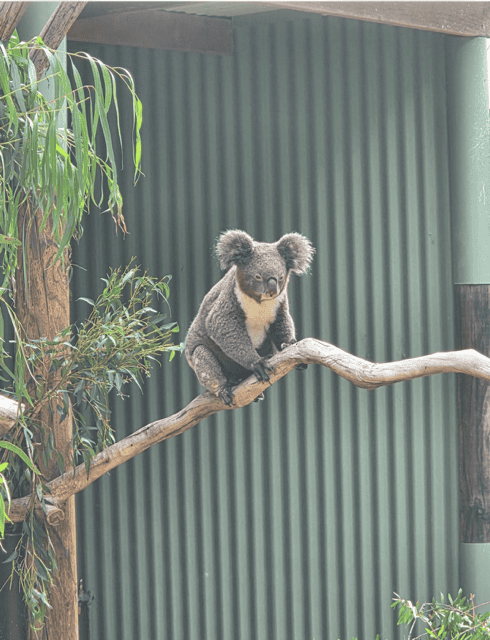
For Karisma Edouard, who was a junior when she studied abroad at the University of New South Wales (UNSW) in Sydney, her experience was both a careful academic plan and an adventure she had always imagined.
“I chose Australia because I feel like going to Australia is kind of a once-in-a-lifetime opportunity,” Edouard said. “Not everyone can say that they’ve done it. I had the philosophy that if I didn’t go when I did, when would I ever make it to that side of the world?”
Her planning started early: “I knew I wanted to go abroad during a winter term since I was a freshman,” she explains. “So I saved classes I knew I would be able to take abroad.” Alongside major requirements like BME 211 and BME 331 (Fluid Mechanics), Edouard was eager to take Aviation and Sustainability—a course culminating in a four-day trip to the Great Barrier Reef.
Credit transfer and academic compatibility were essential to Edouard’s planning: “UNSW has a really good engineering program, and a lot of their classes counted toward my biomedical engineering major. I just wanted to make sure I could take advantage of being in Australia, while also staying on track for graduation.”
Edouard felt well prepared after IPE’s orientation. “They had past students come in and share tips, like getting a credit card without international withdrawal fees, and ordering Australian dollars from your bank before you go,” she said. “That was helpful for all the logistics.”
However, she cautioned about differences in grading and academic structure. “At U-M, your grade is spread out over homework, class participation, exams. At UNSW, it’s usually just based on exams. My equivalent to BME 211 was just three exams — two midterms and a final. If you’re not a spectacular test taker, that could cause stress.”
She learned that some UNSW courses even have “hurdle rules”: “If you fail a final, you fail the entire course, no matter how well you did earlier in the semester. That can be a challenge, especially for students not used to the system.”
Despite the differences, Edouard summarized her experience. “As long as you’ve learned the content for future classes, you’ll be fine. You just have to plan to take advantage of every opportunity—When else will you get to travel across the world and study with local experts?”
Aryan Vatakencherry: A Community of Exchange in Hong Kong
Aryan Vatakencherry took the leap to study at Hong Kong University of Science & Technology (HKUST), diving into biomedical engineering courses in one of Asia’s most dynamic hubs.
“I picked Hong Kong because there were a lot more classes for BME, and the city is so intercultural,” Aryan says. “It’s very close to the Chinese mainland and has a lot of Chinese influences, which I wanted to experience.”
Working closely with IPE and BME advisors, Vatakencherry made sure his credits would count: “Earlier in the summer, I used the TCAF form to get my courses pre-approved at UMich,” he said. “Most of my classes count as BME 400 departmental credits, which keeps me on track to graduate on time.”
Vatakencherry’s first days in Hong Kong brought cultural surprises. “The culture shock hit me right off the bat,” he noted. “Even just taking an Uber from the airport was tough—using hand signals and Google Translate to communicate. Then, at my dorm, the security guard didn’t speak English, and I had to figure things out with gestures. You just adapt, and slowly you pick up phrases.”
He quickly adapted to the international exchange student scene. “Most exchange students here are from Europe—France, Sweden, Germany, the UK,” he said. “The rest are from around the U.S. It’s a pretty tight-knit community, only around 315 students, so you get to know people just by walking to class.”
Beyond academics—where he is taking classes like Data Science in Biomedical Engineering and Medical Instrumentation—Vatakencherry discovered everyday differences. “You need an Octopus card for everything—transportation, buying supplies, you name it,” he said. “At restaurants, I waited 15 minutes for utensils, not realizing they’re hidden in a drawer in the table! Hong Kong also has rules for escalators—stand on the right, pass on the left, which is super helpful when you’re running late to class and trying to move ahead quickly.”
Vatakencherry is also finding time for exploration: “The school organized a tour to the Tai O Fishing Village, and we saw the Big Buddha. With friends, we explored Victoria Harbour, learned how to use public transit, and visited shops. Hong Kong’s huge—you could live here your whole life and still find new places.”
On academics, he noted similarities and subtle differences: “Courses seem pretty similar. For example, Data Science for Biology and Medicine is a lot like BME 487 at UMich, but with less of an AI focus. My Bioinstrumentation for Healthcare class focuses a lot on practical applications for devices in the biotechnology field, and often involves bringing these actual devices into class and studying them.
Vatakencherry is already reflecting on how this experience could shape his future: “Biomedical engineering is newer and more niche here, so I’m curious how it’s taught and viewed. Hong Kong is closer to the biotech industry in China, and it’s a great place to network.”
His advice to other BME students is direct: “Be challenged. You’ll remember it forever, even if it’s not seamless. The food’s great, transit is easy, and if you want an exchange experience that’s totally different, Asia is the place.”
Angelina Burson: Finding Flexibility and Adventure in Sydney
For Angelina Burson, a BME junior, the journey from Ann Arbor to Sydney builds on her earlier global experience when she studied abroad in Japan after her freshman year: “I loved my first study abroad so much, and I knew I wanted to fit in another before graduation.”
Burson’s program at the University of New South Wales continues to surprise her. “Originally, I chose Australia because I planned to take a required class—BME 418—here, but it expired for transfer credit,” she said. “I worked with the BME advisors and switched to engineering expertise electives that count toward my major, and I am determined to make the most of my time here.”
Flexibility has been critical. “I recommend saving engineering expertise or other flexible courses for study abroad—since programs can change, it’s good to have backup options.”
Life in Sydney blends academics, outdoor adventure, and cultural discovery. “Sydney is so green, and people are really active. Everyone wakes up early and goes for runs,” Burson said. “I’ve joined my apartment-mates for hikes, walks, and exploring the city. Public transportation is great, but watch the UV—it’s intense! Using tons of sunscreen is a necessity.”
She’s found differences in teaching styles and grading. “Honestly, there’s less homework and more emphasis on a few big exams here,” she said. “Sometimes, a final paper is worth 50% of your grade. Luckily, transfer credit for UNSW at U-M is pass-fail, and the bar for passing in Australia is generous. Still, the sense of pressure is different.”
Burson has been strategic about budgeting. “Financial aid and scholarships helped a lot—sometimes studying abroad is less expensive than U-M tuition, especially for out-of-state students,” Burson said. “And the IFSA program made housing and logistics easy, so I could focus on the classes I was most excited about.” She also sought out opportunities for paid positions while abroad. “I am an IPE Winter Blogger, which was a great chance for me to have some income while reflecting on my experience to share with others,” she said. “I definitely encourage all students researching study abroad to check out what living and studying day-to-day means for their specific program.”
Social connections have been a highlight. “Most of my friends here are in IFSA and from American universities—Vanderbilt, Tufts, Swarthmore—and there’s a real sense of community.” Burson is already building networks and learning about local education systems: “It’s cool getting perspectives from Australians on classes, recommendations for food or places to visit, and learning about their high school and college cultures.”
Burson’s reflection is clear: “Pick classes that excite you and leave space for fun! Study abroad isn’t just about grades—it’s about building friendships, exploring something new, and appreciating all the little differences.”
Aarushi Gangrade: Mapping Discoveries in Madrid
For Aarushi Gangrade, her semester at Universidad Carlos III de Madrid was the result of careful planning and big dreams. “When I came to Michigan, I didn’t anticipate going abroad for a semester, but meeting people who had amazing experiences got me interested,” she said. “I haven’t really spent any time in Europe, so Madrid sounded exciting.”
Gangrade approached the process as a giant puzzle. “I had to map out everything for my major and minors so I could graduate in four years,” she said. “I worked closely with Allie Tharp and other BME advisors for my schedule, and even though my business minor doesn’t let me count classes abroad, I made sure it’s still possible to fit everything in.”
Gangrade took Tissue Engineering, Circuit Design, Spanish language, and an Industrial and Operations Engineering course. Housing and the visa process were easier than expected, thanks to the CEA program: “They provided documents and logistics so getting my Spanish visa was smooth,” she said. “Some people in other programs have to find their way to Chicago, but everything for us was coordinated.”
The prospect of living with 8-12 other students in an apartment was exciting for Gangrade. She’s also ready for a different academic rhythm: “In Madrid, most classes rely on two or three major exams—that can be 40-50% of your grade. It’s pass/fail, which is a relief, but it’s still a big responsibility.”
Additional travel opportunities abounded: “Madrid’s central location made it easy to visit other places in Europe by bus, train, or flight.” She encouraged students planning a study abroad program to also build in free time on weekends to take advantage of nearby diverse travel locales.
Gangrade’s advice comes from reflection: “There’s honestly no better time to be able to go to an entirely different country for six weeks or six months. Being able to explore it at this age, figuring out who you are while still in college, is such a great experience.”
Emily Dobao: Finding Work-Life Balance and Mentorship in San Sebastian
For BME’s Emily Dobao, spending part of her summer researching in Spain offered new perspectives—both professionally and personally. “At Universidad de Navarra-Tecnun, we worked directly with professors instead of graduate students, which meant a lot more mentorship,” she says.
Her group focused on two projects: a CT scan initiative and building a 3D arm for stimulating muscle tissue. The experience was both hands-on and self-directed: “We were the only group in BME doing research, and our PI spent a lot of time talking to us, checking our progress, and providing resources. It was more self-paced, but we prioritized our time and tasks.”
Dobao found Spanish work culture “more relaxed” than the American classroom: “We’d have midday breaks to talk about research—or just life,” she said. “Summer hours meant you could leave the lab earlier to explore.”
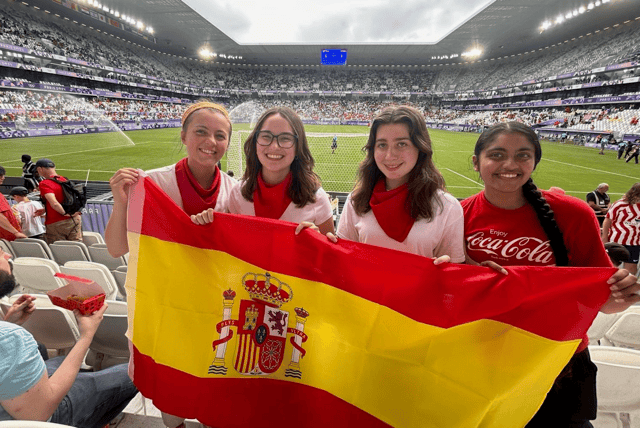
That exploration took her far: “We had three long weekends during our stay, so I traveled to Barcelona, Paris, and Milan, and even got to see an Olympic soccer game. The university also planned wine tastings and trips across the border to France.”
She encourages future study abroad students to plan early: “I started thinking about studying abroad at the end of my freshman year so I could be sure the classes would fit,” Dobao said. “If you know Spanish, it’s a huge advantage, but even if not, everyone’s willing to help.”
Dobao’s advice is clear: “Research takes more effort but is completely worth it. You gain skills, confidence, and even new references and mentors for future career steps. Going abroad opened doors I hadn’t considered before.”
Learning Without Borders: The Michigan Global Engineer
From Hong Kong’s skyscrapers and Sydney’s sunshine to Madrid’s plazas and the labs of San Sebastian, Michigan BME students are expanding their skills, perspectives, and networks. Supported by the IPE program, departmental advisors, and a community of past travelers, these Wolverines prove that global education can be both rigorous and transformative.
Aarushi Gangrade summarized her experience: “Take the leap. You’ll never regret what you learn from the world.”