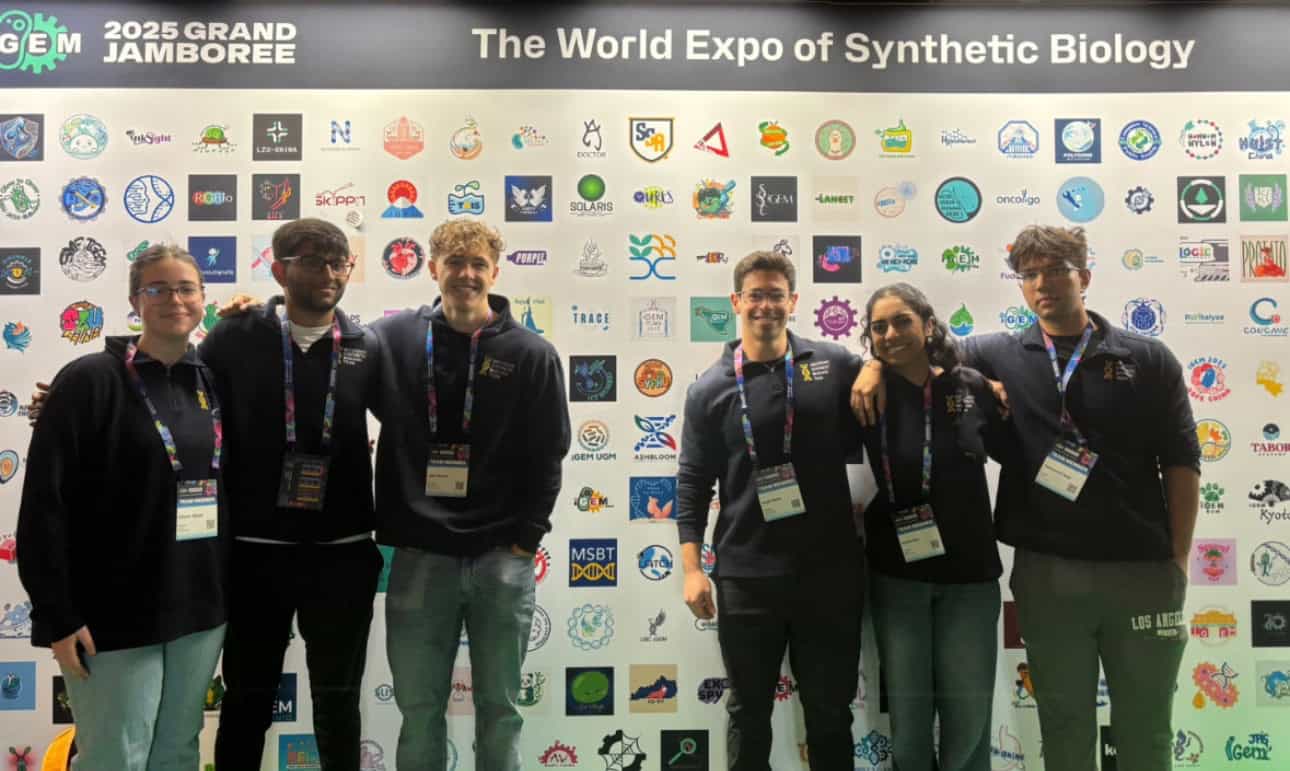
Michigan Synthetic Biology Team Earns Gold at International iGEM Competition in Paris
The team’s novel bacterial cancer therapy caught the attention of judges and fellow innovators alike—using innovative synthetic biology to tackle one of medicine’s most persistent challenges: targeted ovarian cancer treatment.
BME-sponsored student organization reimagines cancer therapy with magnetotactic bacteria, leading the way in outreach and innovation.
The Michigan Synthetic Biology Team (MSBT), co-sponsored by U-M Biomedical Engineering (BME), has once again raised the maize-and-blue banner high, earning a Gold Medal at the 2025 International Genetically Engineered Machine (iGEM) Competition in Paris. The team’s novel bacterial cancer therapy caught the attention of judges and fellow innovators alike—using innovative synthetic biology to tackle one of medicine’s most persistent challenges: targeted ovarian cancer treatment.
A Magnetizing Idea Comes to Life
“We’re really excited to talk about our project,” said junior Allison Myers, the MSBT co-lead of human practices and incoming co-president. The team’s approach centered on magnetotactic bacteria, a non-model organism whose ability to migrate along magnetic fields and home in on low-oxygen environments, like those found in tumors, makes it a potent candidate for next-generation therapeutics to develop a localized bacterial-based treatment option that delivers therapeutics directly to a tumor site.
“Our project uses a bacterial trifecta strategy,” explained junior Harini Ram, the MSBT incoming co-president. “First, we leverage the magnetotactic properties to guide bacteria to the tumor site. Second, these bacteria naturally move towards hypoxic regions—perfect for ovarian tumors. Third, with a two-plasmid system, we can produce a cytotoxic protein to kill tumor cells and a tumor-specific ligand to improve localization.”
The spark for this idea came from a YouTube video, Ram said, showing how magnetotactic bacteria could clean up heavy metals in oceans. “We thought, what if we used this for therapeutic purposes?” The result: a highly programmable cancer fighter, controllable through external magnetic fields, which is able to precisely deliver its toxic payload where most needed.
How iGEM Judging Works: Excellence in Three Core Areas
iGEM, a premier international synthetic biology competition, brings student teams together to solve real-world problems with engineered biology. “Projects are organized into ‘villages,’ and this year we were in the Oncology Village,” said Myers. The judging rubric rewards not just scientific accomplishment, but also outreach, modeling, and educational initiatives.
“To earn gold, we had to achieve excellence in human practices, education, and modeling, while also meeting the bronze and silver criteria,” said Myers. “It’s a comprehensive, step-wise system—and this year, the judges didn’t have many hard-hitting questions during our interview, which showed that our wiki preparation and advance supplemental work were very thorough.”
Excitement, Challenges, and Seeing Science Come to Life
With 26 teams competing in the Oncology Village, the MSBT’s unique research topic drew much interest. “Nobody had ever really heard of magnetotactic bacteria in this context,” said Myers. “It was great to share the innovation ideas and network with people from around the world.”
The lab work wasn’t always smooth sailing. “Assembling our plasmid and getting our cytotoxic protein expressed was a challenge,” Ram explained. “We did a lot of troubleshooting, consulting with experts—including Dr. Jiahe Li, assistant professor, BME, who advised us early on about plasmid engineering and our heat shock promoter design.”
The “heat shock promoter” is an ingenious module: as the bacteria are exposed to an external magnetic field, flipping that field generates heat—activating the promoter and triggering therapeutic protein production. “This could be used for many different purposes, not just cytotoxic proteins,” Ram noted, suggesting strong future potential.
Community Outreach: Changing Minds About Bacteria
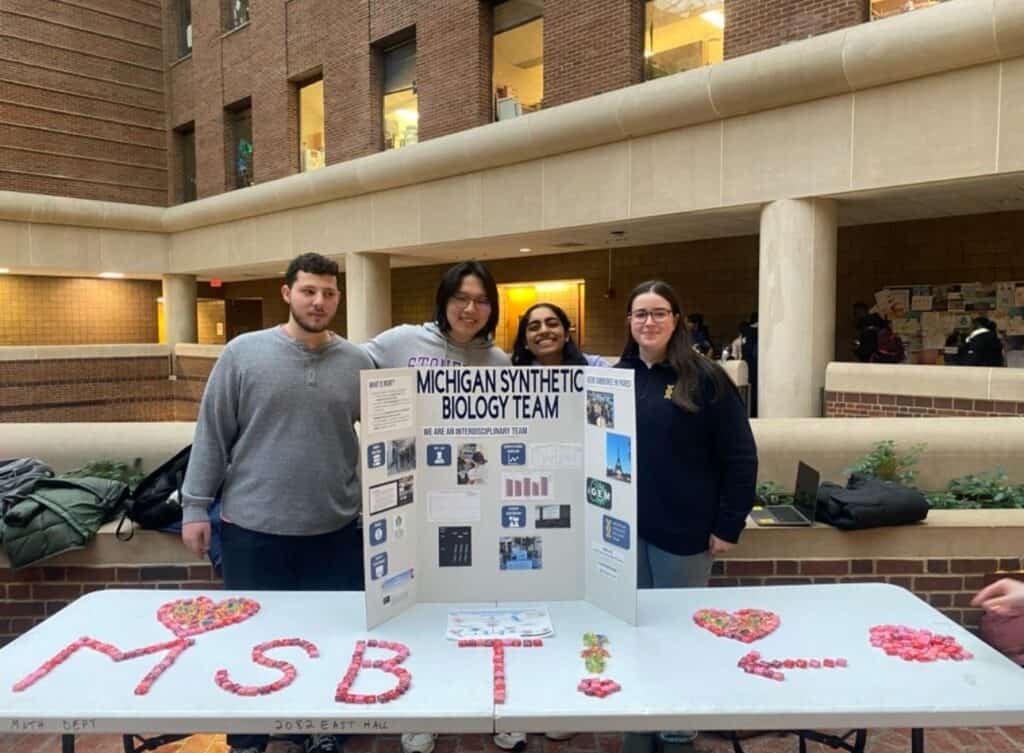
Education and outreach were central to MSBT’s success. “We made a podcast series—”MSB Talks,” on Spotify—connecting experts in synthetic biology, oncology, and metabolic engineering to our own educational events,” said Myers. The team actively surveyed community perceptions about bacteria and synthetic biology, aiming to dispel negative associations.
“We found that many children have a negative attitude toward bacteria,” Myers said. “So we explained how our therapy works and why bacteria can be a force for good. Input from these community discussions actually shaped our project.”
Support from BME was Key
Traveling to Paris, presenting at an international conference, and overseeing an innovative research project—all required substantial resources. “Funding from the BME department directly allows us to potentially send more students to represent our team at iGEM, and helps ensure we have the resources to create the best possible product,” said Isabella Martinez, a BME sophomore. “It’s a concrete way the department and our donors make a difference in students’ lives.”
With about 35 members supporting the team’s effort—including undergrads from BME, Molecular, Cellular, and Developmental Biology (MCDB), and Cellular, Molecular Biomedical Science (CMBS)—six students all together represented U-M in Paris this fall. Team roles ranged from wet lab experiment design, wiki development, outreach, and team leadership.
Looking Forward: More Innovation Ahead
What is next for the MSBT? Further development and troubleshooting to perfect their magnetotactic therapy, and possibly a new project for the next competition cycle, addressing the tick-borne alpha-gal syndrome. Recruitment is underway for new team members, and MSBT is eager to continue breaking boundaries in biomedical research. For all their dedication, creativity, and collaboration across the College of Engineering, LSA, and Medical School, the MSBT continues to innovate, educate, and make a real-world impact.
For more information about MSBT, please visit the team website.