The laboratory of Carlos Aguilar, Associate Professor, Biomedical Engineering, is making significant strides in understanding and treating severe muscle trauma and innovating next-generation wound healing technologies. In two recently published studies, Dr. Aguilar’s team tackled major challenges in understanding and treatment of large, traumatic wounds.
Targeted Immune Modulation for Volumetric Muscle Loss
For the past six years, the Aguilar Lab has specialized in volumetric muscle loss—a devastating traumatic injury characterized by the removal of a large volume of muscle tissue. These injuries, which can occur from surgery, accidents, gunshot wounds or battlefield injuries, often result in permanent loss of muscle function due to extensive scarring and fibrosis.
“After this type of injury, the muscle doesn’t regenerate. Instead, the tissue scars, leading to loss of function in that limb,” Dr. Aguilar explained. Central to this problem is the body’s strong and prolonged immune response. Following injury, “a lot of immune cells continually flood into the tissue. While they try to clean up bacteria and debris, this strong and persistent inflammatory response activates fibrogenic cells to deposit scar tissue, essentially sealing the wound but leaving little chance for muscle regeneration,” he said.
Addressing this, his group sought to develop new therapeutics that specifically modulate this pathological immune response. Initially, they explored a drug called AICAR (an AMPK agonist), which could alter the metabolism of immune cells and reduce scarring. However, as Dr. Aguilar noted, “The problem is that these drugs have very limited bioavailability. We had to give a high dose, frequently, and systemically—which brings risks of toxicity, cost, and potential side effects all over the body.” There is also the potential for infection when introducing an IV drug delivery.
To overcome these limitations, the team collaborated with Jöerg Lahann’s group to engineer albumin-coated nanoparticles for targeted drug delivery. Dr. Lahann is the Wolfgang Pauli Collegiate Professor of Chemical Engineering, Director, Biointerfaces Institute, Professor, Biomedical Engineering, Professor, Materials Science and Engineering, Professor, Macromolecular Science and Engineering at the University of Michigan.
“These particles look like normal circulating proteins to the body, but encapsulate the drug and provide a steady, sustained release over several days,” said Dr. Aguilar. By injecting these nanoparticles directly into the muscle at the wound site, they achieved highly localized delivery. “We found that the nanoparticles were taken up by exactly the immune cells we wanted to target, stayed mostly in the muscle, and didn’t spread to other tissues such as the spleen or liver. That’s paradigm-shifting for therapies of this type.”
Single-cell sequencing revealed that treated immune cells shifted from a pro-inflammatory to a reparative state, leading to improved removal of cellular debris and reduced scarring. “Our results show we can specifically alter immune cell behavior in a targeted, tissue-specific way, opening the door for new strategies to enhance muscle healing,” Dr. Aguilar said.
Large Animal Model Validates Intelligent Wound Coating
The lab also participated in a collaborative DARPA-funded project with the University of Pittsburgh, developing an “intelligent bandage” system for large traumatic wounds. “We used a canine model for volumetric muscle loss—a much closer approximation to human injury,” said Dr. Aguilar. “We found that the same immune responses we observed in mouse models are conserved in these large animal wounds, although the timeline is longer because of the greater removal of tissue mass.”
To support wound healing and prepare for the application of electronic ‘smart’ bandages, the team tested a decellularized extracellular matrix hydrogel as a wound coating. “This coating attaches to both the tissue and the electronics, and we found it actually preserves more muscle and accelerates regenerative healing compared to untreated wounds,” Dr. Aguilar explained. “Spatial transcriptomics and single-cell analysis showed that the coating reduced scarring, modulated harmful immune responses, and promoted blood vessel regrowth in the tissue.”
While these results are preliminary, Dr. Aguilar is optimistic. “Even a simple hydrogel wound covering was able to reduce some of the pathological scarring and protect against damaging inflammation. This offers promising implications for future therapies combining biomaterials and immune modulation.”
Looking Ahead: Broader Applications and Collaborative Science
The Aguilar Lab envisions broader applications for these targeted therapies, particularly in conditions involving chronic muscle degeneration and scarring. “We see potential for localized immune modulation in age-related muscle loss and diseases such as Duchenne muscular dystrophy or ataxia. There could even be applications in neurodegenerative diseases where immune responses drive pathology, although more research is needed,” said Dr. Aguilar.
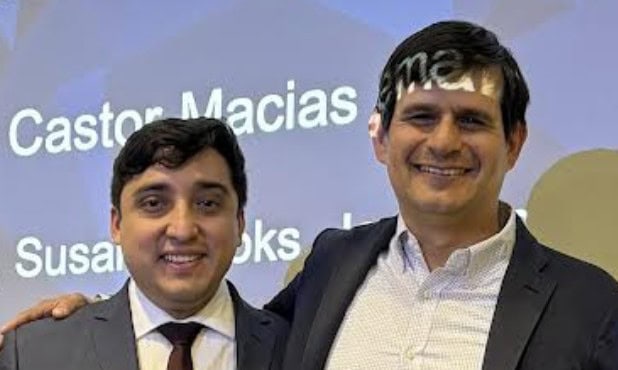
He credits the interdisciplinary and collaborative approach to his group’s success. “Our progress was possible thanks to amazing students Jesus Castor Macias, Adrienne Giannone, and our collaborators here at the University of Michigan Jöerg Lahann and University of Pittsburgh including Bryan Brown and Steve Badylak. These are truly team-driven advances,” Dr. Aguilar said.
Research at a Glance: