U-M Startup HistoSonics Announces $2.25B Acquisition by Consortium of Top-Tier Investors
The idea behind HistoSonics’ technology began decades ago at U-M in the Biomedical Engineering Department.
1–2 minutes

The idea behind HistoSonics’ technology began decades ago at U-M in the Biomedical Engineering Department.
On August 7, U-M startup HistoSonics announced a management-led majority stake acquisition by a syndicate of globally recognized private and public investors. This acquisition values the company at approximately $2.25 billion, positioning it for accelerated growth of the Edison System across new clinical indications and global markets. The company is redefining cancer treatment with its non-invasive tumor-destroying Edison Histotripsy System.
“We are so proud of what HistoSonics has accomplished, which continues to address our society’s needs in cancer treatment. This is an important illustration of what can be achieved when we begin with basic research and foster strong collaborations with Michigan Medicine,” said Karen A. Thole, Robert J. Vlasic Dean of Engineering and Professor of Mechanical Engineering and Aerospace Engineering.
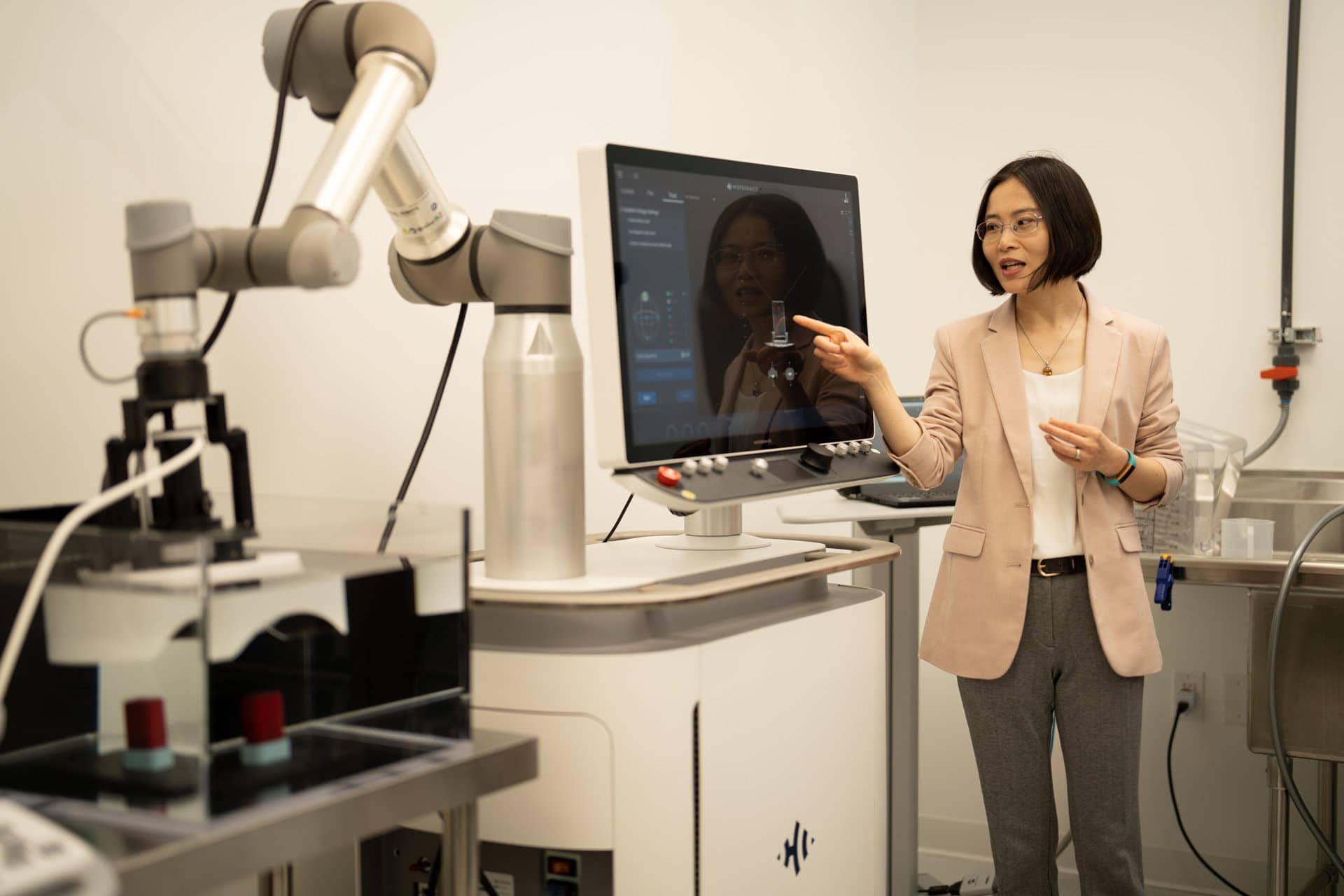
The idea behind HistoSonics’ technology began decades ago at U-M in the Biomedical Engineering Department. In 2001, Zhen Xu, a co-inventor of the treatment HistoSonics uses to kill liver tumors with focused ultrasound—called histotripsy—was a Ph.D. student in the lab of the late BME Professor Charles Cain. The treatment was invented in his lab during that time. Dr. Xu is now the Li Ka Shing Endowed Professor, Biomedical Engineering and Professor, Radiology. A team of U-M researchers, led by Professors Cain and Xu, along with Timothy Hall, Jonathan Sukovich, J. Brian Fowlkes and William Woodruff Roberts from Michigan Engineering and Michigan Medicine, invented and developed histotripsy.
In its early years, HistoSonics received support from the U-M Coulter Translational Research Partnership Program, which specializes in helping researchers develop and commercialize healthcare products. The program provided consulting help and $300,000 for early testing. Later, U-M’s Innovation Partnerships guided the research team through applying for patents and launching HistoSonics in 2009.
Visit Michigan Engineering for an in-depth Q&A with Dr. Zhen Xu and more histotripsy feature stories.